10 Powerful Reasons to Learn Selenium WebDriver with Java and TestNG
Prabhat
Sep 10, 20264 min read18 views
Introduction to Selenium WebDriver with Java and TestNG
Automation testing has become an important part of modern software development. Instead of checking the same web application manually again and again, testers can use automation tools to save time and improve consistency.
Selenium WebDriver with Java and TestNG is a popular combination for web automation. Selenium controls browsers, Java provides programming capabilities, and TestNG helps organize and execute automated tests.
Advertisement
The Korshub-listed course focuses on these skills through practical examples and step-by-step learning.
What Is Selenium WebDriver?
Selenium WebDriver is an automation interface that allows programs to control web browsers. It can open pages, locate elements, enter information, click buttons, and validate results.
Selenium officially describes WebDriver as a browser automation API designed to drive browsers natively.
Why Learn Selenium with Java?
Java is widely used in enterprise software and test automation. Learning Java alongside Selenium gives testers the programming foundation needed to create reusable and maintainable automation scripts.
You can use Java concepts such as classes, methods, conditions, loops, and objects while creating Selenium test cases.
What Is TestNG?
TestNG is a testing framework that helps testers organize and execute automated tests.
With TestNG, you can structure test methods, use assertions, group tests, and create organized test suites. This makes it easier to manage larger automation projects.
Course Overview
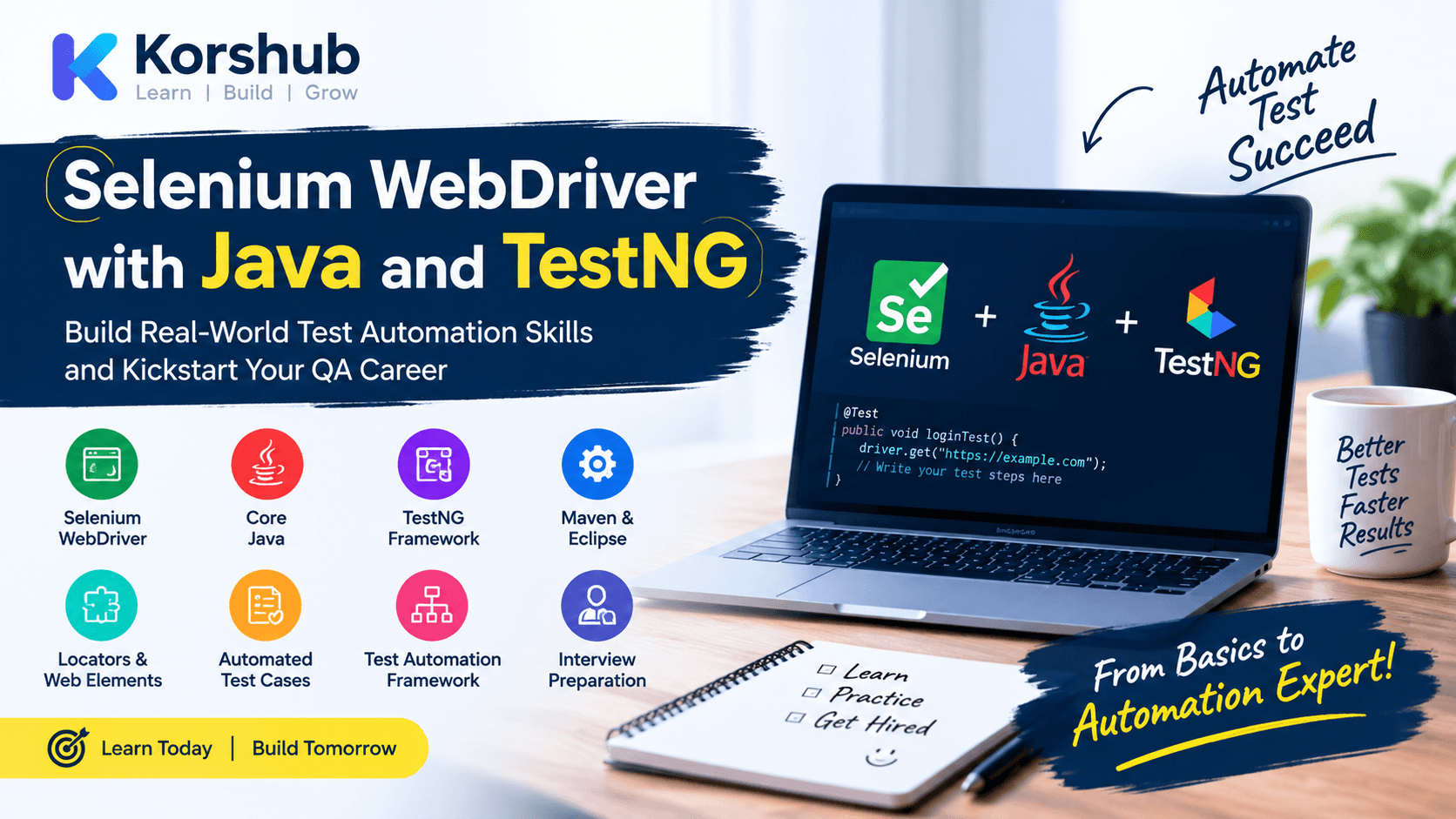
The course combines Selenium WebDriver, Core Java, Eclipse, Maven, and TestNG. It also teaches students how to write automated test cases and develop a test automation framework.
This makes it useful for learners who want practical exposure instead of learning every technology separately.
Learn Core Java Skills
Before creating advanced Selenium scripts, understanding Java basics is valuable. The course introduces the Java concepts required for Selenium automation.
For beginners, this approach can make automation testing easier to understand.
Master Selenium WebDriver Basics
A strong Selenium foundation starts with browser automation. Learners can understand how to launch browsers, navigate websites, identify elements, and interact with web pages.
Selenium's official documentation also provides Java examples for starting a WebDriver session and interacting with web elements.
Understand Locators and Web Elements
Locators are one of the most important parts of Selenium testing. Testers need to identify buttons, text fields, links, dropdowns, and other elements before interacting with them.
Common approaches include:
ID
Name
Class name
CSS selectors
XPath
Link text
Good locator strategies can make automated tests more reliable.
Create Automated Test Cases
Once the basics are clear, you can start creating automated test cases for real web applications.
A typical Selenium test may open a browser, visit a page, enter information, click an element, and verify the expected result.
This turns repetitive manual testing into a repeatable automated process.
Use Maven and Eclipse
Development tools also matter. Eclipse can provide an environment for writing and debugging Java automation code, while Maven helps manage project dependencies.
Selenium's official Java setup documentation supports installing Selenium through build tools such as Maven.
Build a Test Automation Framework
Learning individual Selenium commands is only the beginning. Professional automation projects need structure.
A framework can help organize:
Test cases
Page objects
Test data
Configuration
Dependencies
Reports
Reusable methods
The course is designed to help learners move toward developing a complete test automation framework.
Prepare for Selenium Interviews
Selenium and TestNG knowledge can also support QA automation interview preparation. The course includes interview questions and answers, helping learners review important concepts before technical discussions.
Who Should Learn Selenium?
This course can be useful for:
Beginners interested in automation testing
Manual testers moving toward automation
QA professionals
Java learners interested in testing
Software testing students
Aspiring automation engineers
Some Core Java knowledge is expected, according to the current course requirements.
Benefits of Selenium Automation
Selenium automation can reduce repetitive manual work and help teams execute regression tests consistently.
It also provides valuable skills around browser automation, programming, test design, and framework development. Selenium supports major browsers through WebDriver, making it useful for cross-browser testing.
Frequently Asked Questions
Is Selenium WebDriver difficult to learn?
Selenium becomes easier when you learn Java fundamentals first and then practice browser automation step by step.
Is Java required for Selenium?
Java isn't the only language supported by Selenium, but it is a popular choice. This particular course uses Java for Selenium automation.
What is TestNG used for?
TestNG helps organize, configure, and execute automated tests. It is commonly used alongside Selenium for structured test automation.
Can beginners learn Selenium?
Yes. Beginners can learn Selenium by starting with Java basics, browser control, locators, and simple test cases before moving to frameworks.
Can Selenium automate real websites?
Yes. Selenium WebDriver is designed for browser automation and can interact with web pages much like a user.
Is Selenium useful for QA automation careers?
Selenium remains an important technology for web automation. Learning Selenium together with Java and a test framework can provide a strong foundation for QA automation work.
Conclusion
Selenium WebDriver with Java and TestNG offers a practical path into web automation testing. By combining Java programming, browser automation, TestNG, Maven, and framework concepts, learners can build skills that go beyond simple test scripts.
If you're ready to move from repetitive manual testing toward automated testing, learning Selenium step by step can be a smart career move. With consistent practice, you can progress from basic browser automation to building structured and maintainable test automation frameworks.
https://korshub.com/courses/selenium-webdriver-with-java-testng-testing-framework