How to Run Google Ads: Start With One Outcome
Before opening the campaign builder, write down the action you want someone to take. For an online store, that might be a purchase. For a service business, it could be a completed enquiry form or a booked appointment.
Be specific. “Get more traffic” tells you little about whether the campaign is working. “Get enquiries for our accounting service” gives you a way to judge the traffic you buy.
Then check the page people will visit after clicking your ad. Does it explain the offer, answer likely objections, and make the next step obvious? If the page is confusing, a carefully built campaign will still have a hard time turning interest into business.
Set up conversion tracking before launch
Conversion tracking records the actions that matter after an ad interaction. Test it yourself before spending: submit the form, complete a test purchase where possible, or check that the intended confirmation page triggers the right event.
Pay particular attention to primary and secondary conversion actions. Primary actions can guide bidding; secondary actions are generally there for observation. If you ask a campaign to optimize for a minor action instead of the enquiry or purchase you actually value, the results may look busy without helping the business.
Choose a Campaign Type for the Job
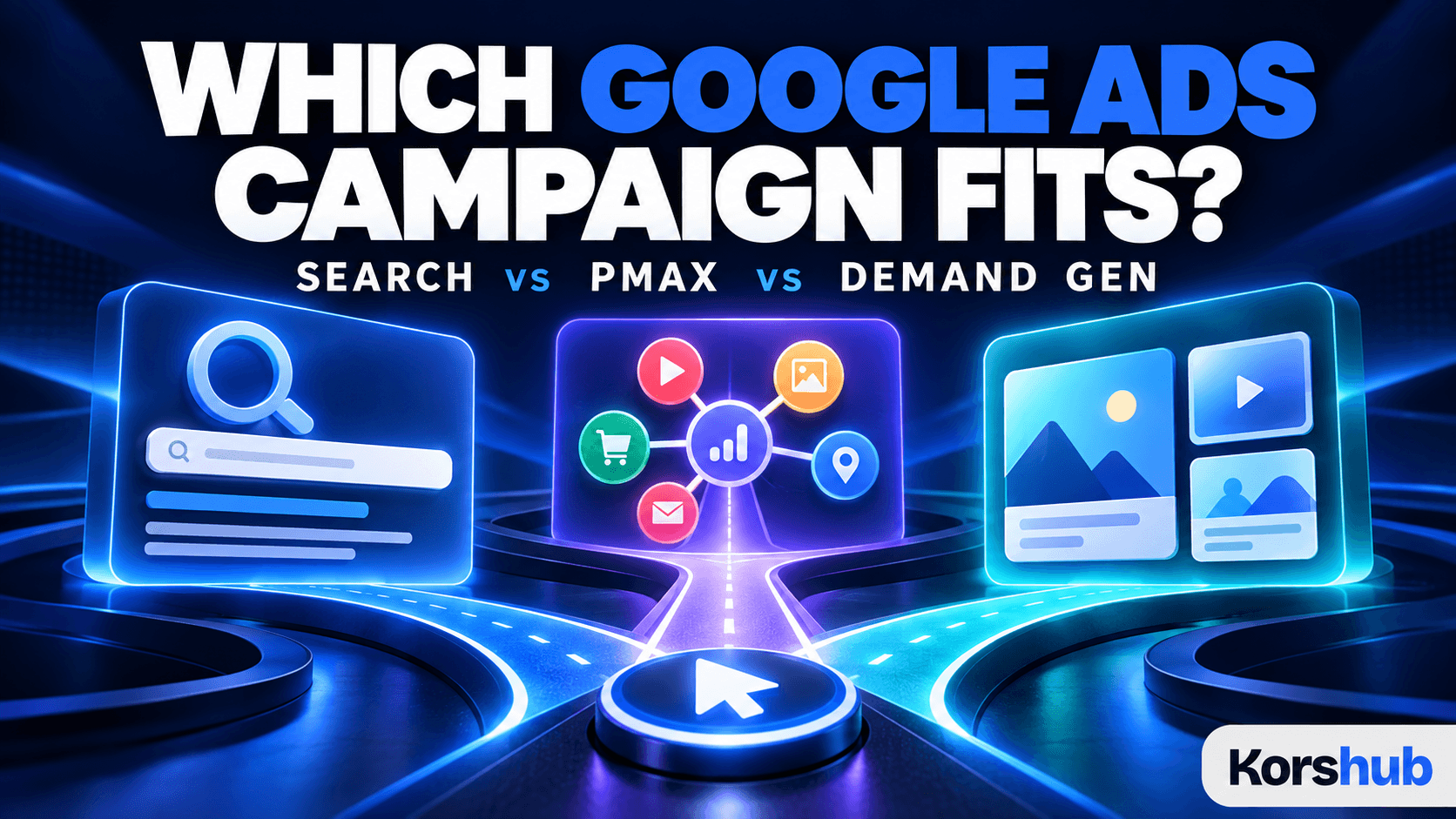
Google Ads includes Search, Display, Video, Shopping, Performance Max, Demand Gen, and other campaign types. You don’t need to launch all of them to learn the platform.
A Search campaign is a sensible place to begin when people already look for what you sell. Someone searching for “emergency plumber in Patna” has a clearer immediate need than someone casually watching a video. A retailer with a product feed may have a reason to learn Shopping; a business with strong creative assets may explore Video or Demand Gen later.
Treat campaign types as different ways to reach customers, each with its own setup and measurement needs. Pick one that matches your offer and goal, then learn what its reports can—and can’t—tell you.
Build a Search Campaign Around Intent
Keyword research isn’t a contest to collect the longest list. It’s a way to identify searches that suggest someone may want your offer.
Imagine you provide bookkeeping for small businesses. “Bookkeeping service for small business” could be relevant. “What does a bookkeeper do?” may attract someone who’s only researching a career. Both searches concern bookkeeping, but they call for different ads and landing pages.
For a first Google Ads campaign setup:
Group closely related keywords around one offer.
Write an ad that reflects what the person searched for.
Send them to a page about that specific offer.
Add negative keywords for searches you don’t want.
Review actual search terms after launch and refine the campaign.
Match types help control how broadly keywords can connect to searches, while negative keywords exclude unwanted terms. Neither choice is something to set once and forget; search-term reviews show you where your budget is going.
Give Bidding Good Information
Google Ads offers bidding approaches for different goals, including clicks, conversions, and conversion value. Choose according to what you can measure reliably. A conversion-focused strategy is much more useful when your conversion action represents a genuine lead or sale.
Set a budget you can afford while you learn, and avoid changing several settings every time performance moves. If you rewrite the ad, change the keywords, alter the audience, and switch bidding at once, you won’t know what caused the next result.
Here’s the part many setup guides gloss over: automation follows the signals you give it. Better ad copy can’t compensate for tracking that counts every page visit as a valuable lead. Get the measurement right, then use the reports to decide what deserves more budget.
Check That Your Training Matches the Current Interface
Google Ads changes often, so even a course labelled “2026” deserves a quick feature check. For example, the Korshub course outline includes Enhanced CPC, or eCPC, among its bidding topics. Google says eCPC has no longer been available for Search and Display campaigns since March 2025. That lesson may still explain bidding history, but you shouldn’t assume it describes a selectable option for a new Search campaign.
The useful habit is to learn why a setting was used, then check what your account offers now. Interface labels may change; the underlying questions—what’s the goal, what’s being measured, and who sees the ad—remain useful.
Is the Google Ads MasterClass 2026 Right for You?
This course is best suited to someone who wants broad, structured practice across the platform, particularly a marketer managing several campaign types or client accounts. Its listing labels it advanced and describes 110 video lessons, 21 assignments, and two practice tests. Topics range from Search campaigns and negative keywords to conversion tracking, remarketing, Shopping, Performance Max, Demand Gen, reporting, Google Ads Editor, and manager accounts.
If you’ve never run an ad, begin with one measurable Search campaign rather than trying to master every feature at once. If you already know the basics and need guided demonstrations of unfamiliar tools, the wider curriculum may be more useful. Check the current price, rating, and lesson details on the Google Ads MasterClass 2026 course page before deciding.
Frequently Asked Questions
How do I set up my first Google Ads campaign?
Choose one business goal, create the matching conversion action, select a campaign type, and set your targeting and budget. Then build relevant ads, send them to a suitable landing page, test tracking, and review the campaign before publishing.
Which Google Ads campaign type should a beginner start with?
Search is a practical starting point when people already search for your product or service. The right choice depends on your goal, what you sell, and whether you can measure the result.
Do I need conversion tracking before running Google Ads?
You can launch without it, but you’ll struggle to tell which ads lead to valuable actions. Set up and test conversion tracking before launch if enquiries, bookings, or sales are your goal.
What are negative keywords in Google Ads?
Negative keywords help prevent your ads from appearing for searches you don’t want. Review search terms regularly to find irrelevant queries and decide which ones to exclude.
Should I use Maximize Clicks or Maximize Conversions?
Choose based on the outcome you need and the quality of your tracking. Maximize Clicks aims to bring visits; Maximize Conversions aims for recorded conversion actions, so those actions need to represent something valuable.
Is this Google Ads course suitable for complete beginners?
The course page labels it advanced, although its outline starts with account structure and Search campaign creation. A beginner can use those foundational lessons first, but should expect a broad curriculum rather than a short introduction.