edX
 Udemy
Price
This course is free to enrol.
Enrol free on Udemy →Mark your own learning status. Opening a course link does not establish enrollment.
Loading saved status…
This course covers a lot of ground, from application-layer protocols such as HTTP, FTP and SMTP to the physical media that carry the signal. Its outline runs through peer-to-peer architectures, DNS, sockets and the transport layer, so it reads more like a survey than a single thread.
The network layer section covers routing and forwarding, queues, IPv4 and IPv6, tunnelling, and the routing protocols RIP, OSPF and BGP. The link layer covers Ethernet, switches, error detection, CSMA variants and wireless LANs.
Introduction to Computer Networks
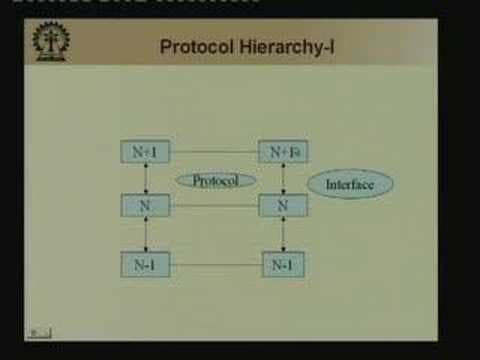
• Understanding network architectures, protocol layers, and their service models.
• Principles of network applications: o Application layer protocols such as HTTP, FTP, and SMTP. o Peer-to-Peer File Sharing Protocols and Architectures. o ISPs and Domain name systems. o Socket API and network socket programming.
• Understanding reliable and unreliable transport-layer protocols: o GBN and SR. TCP and UDP. Port numbers. o Multiplexing and demultiplexing. o Flow control and congestion control. Fairness. o Delay, jitter, and loss in packet-switched networks. o Bandwidth, throughput, and quality-of-service. • Understanding network layer services and protocols. o Switching fabric: o Routing and forwarding. o Queues and buffering. o Virtual-circuit and datagram networks. o Internet protocol. IPv4 and IPv6. Tunneling. o LS and DV algorithms. o Routing in the Internet. RIP, OSPF, and BGP. o Broadcast and multicast. o Handling mobility.
• Understanding network layer services and protocols: o Link-layer and its services. o Ethernet, hubs, bridges, and switches. o Link-layer addressing. o Error-detection and error-correction. Parity, check-summing, CRC. o Manchester encoding. ATM and MPLS. o Local area networks and IEEE 802.11 wireless LANs. o Multiple-access protocols. Random access. o Efficiency of pure and slotted ALOHA. CSMA, CSMA/CD, and CSMA/CA.
• Introduction to physical-layer services and systems: o Introduction to physical media. o Coax, fiber, twisted pair, DSL, HFC. o WiMax, cellular, satellite, and telephone networks. o Bit transmission. o Frequency division multiplexing. Time division multiplexig.
Advertisement
No Korshub reviews yet.