edX
 YouTube
Price
This course is free to watch on its platform.
Watch free on YouTube →Mark your own learning status. Opening a course link does not establish enrollment.
Loading saved status…
This course works through the networking stack by hand, from physical media access control up to application protocols such as HTTP and DNS. The description calls the methodology pen and paper, which suits learners who want to follow the calculations rather than just watch them.
A large part of the course covers error detection and correction, including CRC, checksums, Hamming distance and parity methods. It then moves through stop-and-wait, sliding windows, Go-Back-N and selective repeat, which together explain how reliable transfer is built.
Because it is pitched at an advanced level, it is best used to deepen a foundation you already have.
This course covers the fundamental concepts, protocols, and architectures of computer networking. You will journey through the entire networking stack, exploring how data travels from physical media access control up to complex application layer protocols like HTTP and DNS. You will learn about technical mechanisms, including error detection through CRC, flow control strategies, and advanced IPv4 addressing techniques like CIDR and VLSM. By mastering topics such as TCP congestion control and routing algorithms, you will gain the deep theoretical foundation and practical problem-solving skills necessary to navigate modern internet communications.
Course notes: https://drive.google.com/file/d/1H4HyyNb07e4u3wdV-vfUWJTn2ulullac/view?usp=sharing
Course overview: https://drive.google.com/file/d/1d8cynMNNB0H5DoyBwAj1WTQrIe4X2PLX/view?usp=drive_link
DPP practice questions: https://drive.google.com/file/d/1q3s7Yk_bVdxMosDVf-hkGYOLqgSeza4H/view?usp=sharing
✏️ Course created by Kshitij Sharma.
Chapters
*Course Intro & Basics*
- 00:00 Networking Stack & Stack Concepts
- 00:46 Orientation & Prerequisites
- 01:31 Instructor Intro
- 02:05 Target Audience
- 03:01 Methodology: Pen & Paper Style
- 08:42 Defining Computer Networks
- 09:55 5 Components of Data Comm
- 11:40 Effectiveness Metrics
- 14:14 Simplex, Half & Full Duplex
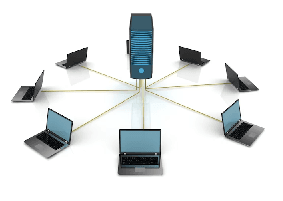
- 19:55 Network Topologies (Mesh, Star, Bus)
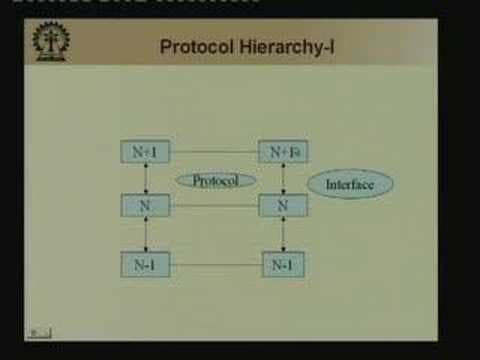
- 28:36 OSI Model & Layered Architecture
*IP Addressing & Subnetting*
- 34:37 Binary & Octet Conversion
- 48:09 IPv4 Logical Addressing
- 55:17 Classful vs. Classless (CIDR)
- 1:10:56 Class A-E Addressing Deep Dive
- 1:18:43 Loopback & Troubleshooting
- 1:35:53 IP Conversion Practice
- 2:15:55 Subnetting & Borrowing Bits
- 2:52:25 Subnet Mask Design
- 3:05:24 VLSM Strategy
- 3:31:04 Routing Tables & CIDR Blocks
- 4:05:50 Supernetting Blocks
*Error & Flow Control*
- 4:19:56 Single Bit vs. Burst Errors
- 4:39:26 Hamming Distance & Correction
- 4:49:52 Simple & 2D Parity Methods
- 5:14:32 CRC & Polynomial Notation
- 5:36:25 Checksum Methods
- 5:43:07 Transmission vs. Propagation Delays
- 6:10:25 Stop and Wait (ARQ)
- 6:30:24 Efficiency, RTT & Throughput
- 6:40:42 Sliding Window Concepts
- 7:07:35 Go-Back-N (GBN) Protocol
- 7:18:54 Selective Repeat (SR)
*Headers & Advanced Protocols*
- 8:05:57 IPv4 Header & TOS Bits
- 8:35:39 TTL & Fragmentation
- 8:52:02 IP Options & Source Routing
- 9:18:10 TCP Header: Sequence & Ack
- 9:40:48 TCP Flags & Handshake
- 9:58:10 SYN Flooding Attacks
- 10:02:19 Congestion Control Policy
- 10:13:30 TCP/UDP Timers & Comparison
- 10:30:10 Aloha & CSMA Methods
- 11:06:07 CSMA/CD Collision Detection
- 11:13:39 Polling & Token Passing
- 11:25:03 Distance Vector vs. Link State
- 11:36:16 Circuit vs. Packet Switching
- 11:48:47 Email (SMTP, POP3, IMAP)
- 11:57:10 DNS Hierarchy & Queries
- 12:01:21 FTP, HTTP, ARP & ICMP
- 12:15:06 OSI Summary & Conclusion
Advertisement
No Korshub reviews yet.