Udemy
Free Udemy
Price
No active coupon right now
View Course →No coupon right now. We'll tell you when there is one.
Mark your own learning status. Opening a course link does not establish enrollment.
Loading saved status…
Rather than a lecture sequence, this course is organized as a run of questions about databases. They start with the difference between data and information, then move through database types, database servers and the job a DBMS does.
Because the material is organized as questions, it works well as a self-test. Try answering each one in your own words before moving on, since the list is more useful as a prompt than as a set of notes.
1. What is meaning of “Data”?
2. What are the main differences between “Data” and “Information”?
3. What is meaning of database?
4. What are some common types of databases?
5. How does a database works?
6. What is meaning of “DBMS”?
7. How does a DBMS manage the concurrent data access?
8. Explain the concept of “controlled access” provided by a DMBS?
9. What are the various applications of DBMS?
10. What functions does a DBMS perform?
11. What is meant by "data manipulation," "data independence," "data redundancy," "data integrity," and "data consistency?”
12. How does a DBMS assist Database Administrators?
13. What do you mean by database servers?
14. Can a database server host only one type of database?
15. What are the different types of database servers?
16. What are the various advantages of DBMS?
17. What techniques do Database Management Systems (DBMS) use to enable concurrent data access?
18. What is the concept of “locking” in DBMS?
19. What is the meaning of isolation levels in the context of DBMS?
20. Why is the use of DBMS preferred over traditional file systems?
21. What are some disadvantages of DBMS?
22. What is the meaning of term “ACID” in Database Management System?
23. Why are ACID properties essential in DBMS?
24. What are the key components of DBMS?
25. What does "DBMS hardware" refer to?
26. Who are the three categories of people who interact with a DBMS?
27. What is meant by Database Access Language?
28. Upon which idea is the Relational model based?
29. What are the key concepts or components of the Relational Model?
30. What is meant by Primary Key, Foreign Key and Composite Key?
31. What are the current trends and future directions in Database Management Systems?
32. Why do some Companies use a combination of both SQL and NoSQL databases to data storage and retrieval?
Advertisement
Tracking since 15 Nov — not enough history yet to tell you whether today's price is any good. Watch the course and we'll tell you when it drops.
This is what we recorded in US pricing — not every price this course has ever had, and prices differ by country.
Complete DBMS in 1 Video (With Notes) || For Placement Interviews

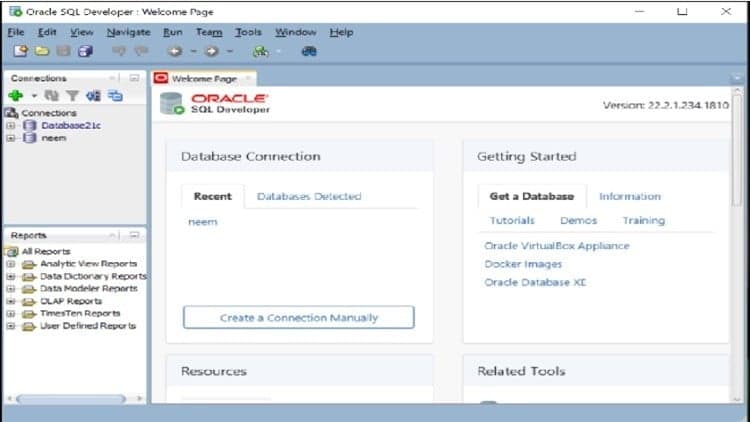
The Complete Oracle SQL course for Data Analysts -A-Z of SQL
Relational DBMS Course – Database Concepts, Design & Querying Tutorial
No Korshub reviews yet.