
Udemy
 Udemy
UdemyPrice
No active coupon right now
View Course →No coupon right now. We'll tell you when there is one.
Mark your own learning status. Opening a course link does not establish enrollment.
If you've studied Music Composition 1 covering rhythm and melody, this course takes you deeper into the architecture of music: harmony and form. You'll analyze real musical examples through both audio and visual notation, understanding how composers construct progressions and overall structures.
Rather than passive lectures, each section combines videos with memory questions, quizzes, and listening assignments—then puts you at the keyboard to write harmonic progressions and full pieces across different forms. By the end, you'll have composed multiple works and internalized what separates competent musicians from complete ones.
Music Composition 2 is the second course in a series of two courses that teaches how music is put together and how to write your own music. The course is divided into two parts. Part one covers the study of harmonic composition. Part two covers the study of compositional form. (Rhythmic and melodic composition were studied in Music Composition 1. It is highly recommended that you take Music Composition 1 before taking this course.)
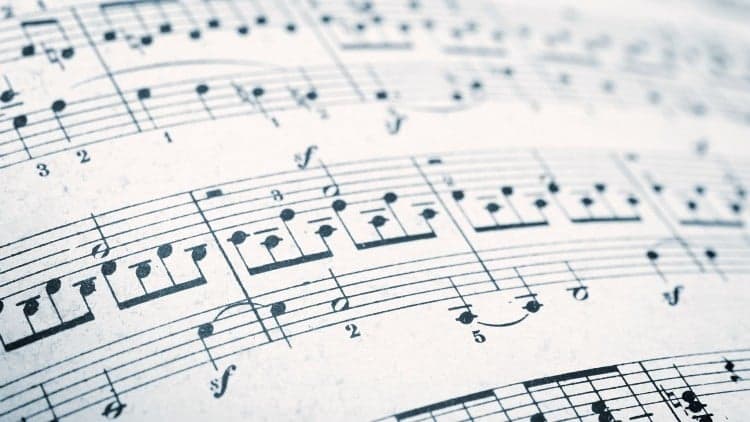
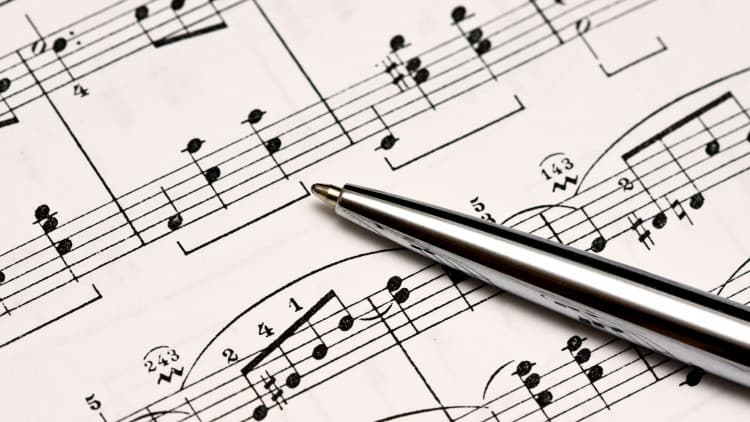
Course lectures consist of both video and text. Each section of the course covers a particular concept (or related concepts). Concepts and compositional techniques are demonstrated throughout the course with real musical examples (pictures and audio samples).
Besides lectures, each section of the course also contains memory questions, section quiz, listening assignments, and composition assignments. Memory questions serve to summarize and reinforce key concepts learned, while the quizzes tests the students’ knowledge and understanding of the material from each section. Students who take this course will get practice notating music with music notation software. In the composition assignments students will get real life practice using the information and techniques learned in each section to write and develop their own harmonic progressions. By the end of the course students will have composed a number of entire pieces in various compositional forms.
Who should take this course? Every student of music should know how to compose! It is a sad but true fact that most modern music teachers and music courses do not include music composition as part of the students’ musical education. In the past it was typical for students of music to be able to compose music. The “complete” musician can play an instrument, has knowledge of music theory AND can also compose! If you want to deepen your understanding of music, learn to write it!
Advertisement



Not the best price we've seen. The lowest we've recorded is $9.99 on 18 Aug.
This is what we recorded in US pricing — not every price this course has ever had, and prices differ by country.