
Udemy
Free Udemy
UdemyPrice
No active coupon right now
View Course →No coupon right now. We'll tell you when there is one.
Mark your own learning status. Opening a course link does not establish enrollment.
Python powers Google, YouTube, Dropbox, NASA—not because it's trendy, but because it works. It's interpreted, flexible, and backed by libraries for almost any task: machine learning, web development, automation, GUI apps. This course builds you from zero toward competence in web development with Django, the framework that bundles productivity into one package.
Django follows a clean separation of concerns (Model-View-Template), comes with built-in tools for databases, authentication, and routing, and lets you build both static and dynamic sites efficiently. The course explains the why alongside the how—so you understand architecture, not just syntax.
No prior coding needed. The focus is on building real web applications, not theoretical computer science. If you want to ship something, this gives you the foundation.
You will learn Python in this course.
Python is one of the fastest-growing languages.
Python is interpreted, object-oriented, high-level, procedure-oriented language
It has different versions
The reason behind it is that there are a huge number of libraries available on the market, many companies and developers are using them, and they can be implemented in many areas.
It is a general-purpose language, as it can be used in Machine learning, GUI, Software Development, Web development, and many more.
Google, YouTube, Dropbox, NASA, and Yahoo use python
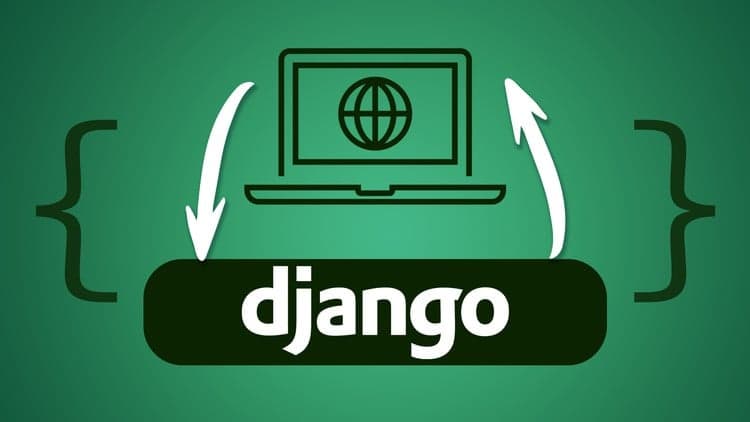
Django is a powerful, high-level web framework built with Python that follows the Model-View-Template (MVT) architectural pattern. The Django Software Foundation (DSF) is in charge of maintaining it as a free and open-source framework. The primary objective of Django is to simplify the development process of complex, database-driven websites.
A framework, in general, is a set of pre-written code and tools that provide a structure for building applications. It offers a foundation and common functionalities, allowing developers to focus on application-specific logic rather than dealing with low-level details. Django provides numerous built-in features and libraries that assist in handling common web development tasks, such as URL routing, form handling, authentication, and database management.
There are several reasons why developers choose Django for web development. Firstly, Django emphasizes the concept of "batteries included," meaning it comes with a wide range of ready-to-use components, reducing the need for external libraries. This saves development time and effort. Additionally, Django promotes the use of reusable code through its modular design, enabling developers to build applications quickly and efficiently.
Django can be used to develop both static and dynamic websites. For static websites, Django can serve as a content management system (CMS) where developers can easily manage and update the site's content. For dynamic websites, Django's MVT pattern plays a crucial role. The MVT architecture separates the application logic into three components:
Model: Represents the data structure and database schema. It defines the data models, relationships, and interactions with the database.
View: Handles the business logic and acts as an intermediary between the model and the template. It processes requests, retrieves data from the model, and prepares it for rendering.
Template: Defines the presentation logic and represents the user interface. It determines how the data is displayed to the user.
The MVT pattern promotes a clean separation of concerns, making the code more maintainable, reusable, and testable. Django's built-in ORM (Object-Relational Mapping) simplifies database operations, providing an intuitive way to interact with the database without writing complex SQL queries.
Overall, Django's robust features, scalability, security measures, and its supportive community make it an excellent choice for building large-scale, database-driven websites efficiently and effectively.
Advertisement


Not the best price we've seen. The lowest we've recorded is $10.99 on 17 Aug.
This is what we recorded in US pricing — not every price this course has ever had, and prices differ by country.