
Udemy
SAP ABAP, OOPS, CROSSAPP, WEBDYNPRO, WORKFLOW, ABAP on HANA
Course4.416kALL LEVELS
$79.99
 Udemy
UdemyPrice
No active coupon right now
View Course →No coupon right now. We'll tell you when there is one.
Mark your own learning status. Opening a course link does not establish enrollment.
You've optimized every select query. Your indexes are perfect. Your code follows every ABAP best practice. And the batch job still takes hours. At that point, traditional optimization is exhausted—you need parallel processing. This course teaches you when and how to apply it.
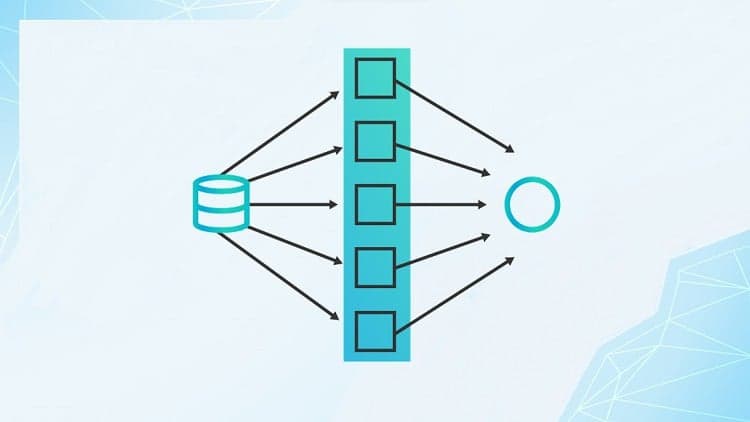
The technique is conceptually straightforward: break enormous data volumes into smaller packets and process them simultaneously across multiple tasks, rather than sequentially. The implementation requires understanding three approaches: RFC function modules with STARTING NEW TASK, the SPTA framework, and background job parallelization. Each has different trade-offs and use cases. For developers hitting the hard ceiling where volume simply overwhelms traditional methods, this is the escape hatch. Processing time drops dramatically when you distribute work across multiple parallel tasks instead of grinding through data one record at a time.
Every SAP ABAP developer would have definitely encountered issues regarding performance tuning. As an ABAPer, we generally attack the select queries and try to optimize the performance but even after having taken all performance measure as per standard ABAP practices, but there is no significant performance improvement.
below are some scenarios where you need parallel processing,
Client complaining about performance issues, all possible modification to improve performance is already done, but seen not much improvement in performance
Huge data to be process
An SAP standard piece of code in custom report taking a lot of time for execution
Long running background jobs
The course will help you learn different parallel processing techniques in SAP ABAP and help you solve the performance issues in your ABAP report.
In this course we have discussed 3 different ways to achieve parallel processing.
RFC function module with STARTING NEW TASK
SPTA parallel processing framework
Background job parallel processing
The basic concept behind the parallel processing framework is to divide the large volume of data into several small work packets and process different work packets into different tasks, so each work packet will be processed at the same time in parallels, and it will significantly reduce time. Using parallel processing framework we can significantly improve the processing time of any program, particularly where data volume is very high.
Advertisement
SAP ABAP, OOPS, CROSSAPP, WEBDYNPRO, WORKFLOW, ABAP on HANA



SAP ABAP, BTP CAPM, RAP, OData, ABAP on Hana, UI5 Fiori BAS
Not the best price we've seen. The lowest we've recorded is $9.99 on 17 Aug.
This is what we recorded in US pricing — not every price this course has ever had, and prices differ by country.