PPC Course vs Free Platform Training: Which Should You Pick in 2026?
Prabhat
Oct 12, 20266 min read8 views
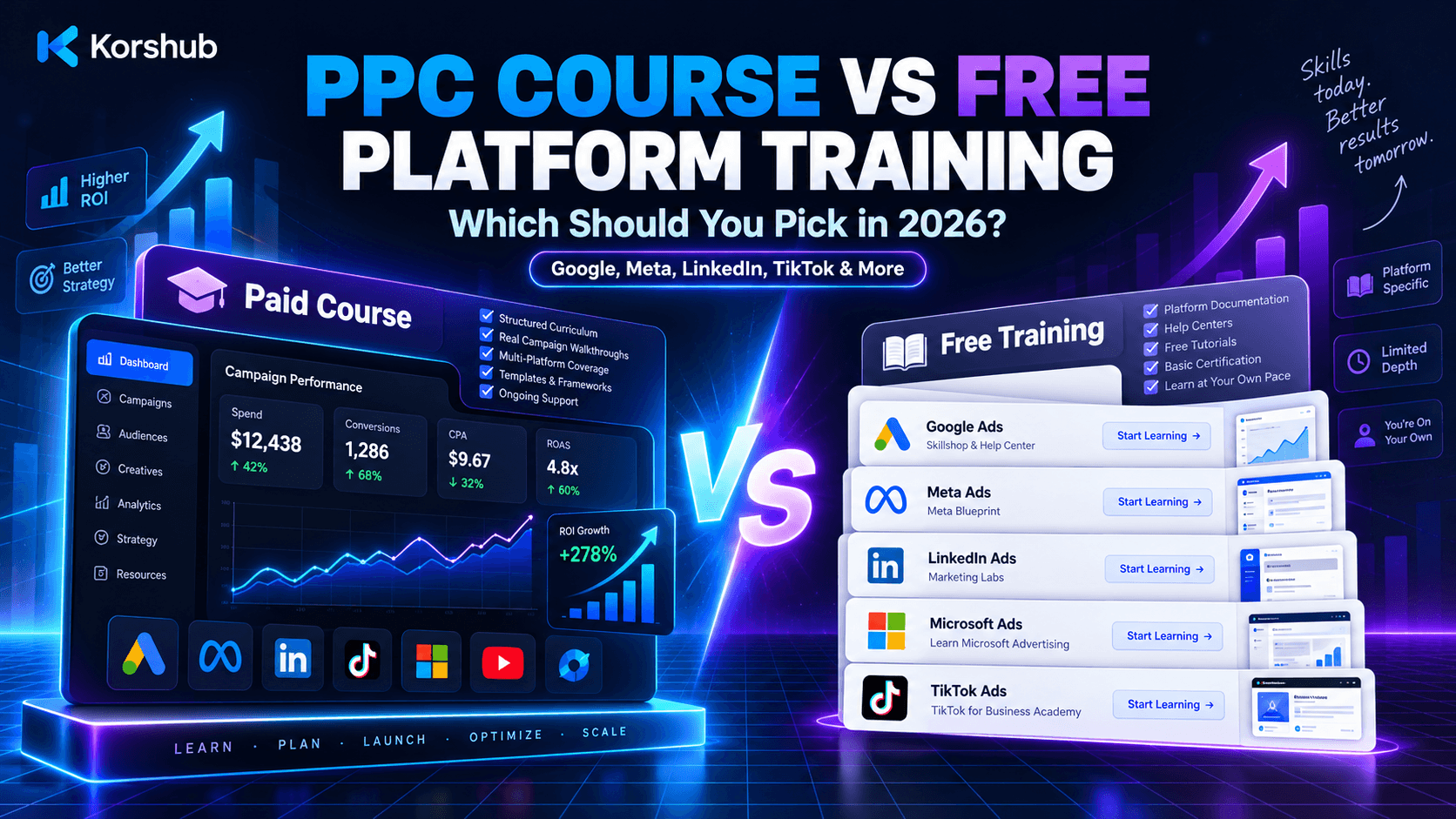
Here's the awkward truth about learning paid advertising: Google, Meta, LinkedIn, Microsoft and TikTok already provide official training for their own ad platforms. So why would you need a PPC course covering 11 different ad networks?
Because knowing where a button is isn't the same as knowing how advertising works across channels.
The Master 11 Ad Platforms 2026 paid ads course takes the all-in-one approach. Instead of learning Google Ads from one website, Meta Ads somewhere else and LinkedIn Ads later, it puts 11 advertising platforms into one learning path.
Advertisement
But that convenience comes with a trade-off. Official platform training is often more current. So which should you choose?
What Does the Master 11 Ad Platforms Course Actually Teach?
This isn't just a Google and Facebook advertising course with a few bonus lessons attached.
It covers Google Ads, Microsoft Ads, Meta/Facebook Ads, LinkedIn Ads, TikTok Ads, X Ads, Pinterest Ads, Snapchat Ads, Reddit Ads, Quora Ads and ShareChat Ads. The current Udemy listing shows 92 sections, 456 lectures and about 29.5 hours of content, and says it was last updated in July 2026.
The lessons go beyond basic campaign setup. Depending on the platform, you'll encounter keyword research, bidding, audience targeting, conversion tracking, remarketing, pixels/tags, campaign objectives, lead generation, reporting, shopping campaigns, video advertising and custom audiences.
There are practical elements too. The course description lists 48 assignments, two practice tests and one quiz, along with a student discussion forum and lifetime access.
The audience is broad: aspiring digital marketers, career switchers, freelancers, business owners, e-commerce sellers, students, creators and working marketers who want to expand beyond a single advertising platform. No previous paid-ad experience is required, although basic digital-marketing knowledge is recommended.
What About the Price and Rating?
At the time of checking, Korshub was showing an active free Udemy coupon for the course. Coupons can expire quickly, so check the current deal before enrolling.
Ratings are changing as well. Udemy's current listing showed 4.5/5 from 134 ratings and 9,454 students, while the Korshub page displayed different cached figures. Because these numbers update independently, use the live course page for the latest rating before making a decision.
PPC Course vs Free Google, Meta and LinkedIn Training
You absolutely can build a large part of your paid-advertising foundation without buying a course.
Google offers free Google Ads training through Skillshop, including certification paths and lessons built around real-world advertising scenarios. Meta Blueprint has learning paths covering Ads Manager, campaign objectives, Conversions API and Facebook/Instagram advertising.
LinkedIn Marketing Labs offers free advertising courses and certifications, while Microsoft has its Advertising Learning Lab. TikTok runs TikTok Academy for marketers and agencies.
So the comparison looks more like this:
11-Platform PPC Course | Official Platform Training | |
|---|---|---|
Platforms | 11 in one course | Separate learning center for each platform |
Cost | Check current Korshub deal | Much of the learning is free |
Learning sequence | One structured path | Fragmented across platforms |
Practical campaign walkthroughs | Major focus | Varies by provider |
Assignments | 48 listed | Depends on platform |
Certifications | Covers certification topics | Official credentials available on some platforms |
Updates | Depends on instructor updates | Usually closest to current platform guidance |
Best for | Broad paid-media skills | Deep platform-specific knowledge |
The Real Gap Most PPC Courses Miss
Here's the issue I'd pay the most attention to.
Paid-ad platforms change faster than course libraries do.
Google changes campaign automation. Meta reorganizes targeting and campaign workflows. LinkedIn retires features. TikTok adds new creative and measurement tools. A 29-hour course can be excellent and still contain individual lessons that age faster than others.
That's why the smartest approach isn't "paid course or official training."
It's paid course plus official documentation.
Use a structured course to understand the concepts that transfer between platforms: auctions, targeting, bidding, conversion tracking, attribution, creative testing and campaign optimization. Then check the platform's official training when you're about to spend real money.
That habit matters more than memorizing 11 dashboards.
Should You Learn All 11 Platforms?
Probably not at the beginning.
Trying to become equally good at Google, Meta, Microsoft, LinkedIn, TikTok, Pinterest, Reddit and everything else can leave you knowing a little about everything but not enough to confidently manage a real advertising budget.
A better roadmap is:
Learn the fundamentals of PPC, auctions, tracking and optimization.
Pick one primary platform based on your target customer.
Build campaigns until you understand the metrics.
Add a second channel with a different intent model.
Expand into niche platforms only when there's a business reason.
If search advertising is your priority, the Complete Google Ads Masterclass 2026 goes considerably deeper into Google-specific PPC, including Search, Shopping and Performance Max.
If your focus is paid social and Instagram/Facebook campaigns, the Facebook Ads MasterClass 2026 is a more focused option with Pixel setup, audiences, lead-generation campaigns, sales campaigns and Meta's advertising tools.
Specialization first. Expansion second.
Verdict: Is This PPC Course Worth Taking?
Choose the Master 11 Ad Platforms 2026 PPC course if you want to become a general paid-media marketer, manage advertising for different clients, or understand how major ad platforms compare without assembling eleven separate learning plans.
It's particularly attractive when Korshub has a strong Udemy discount or free coupon available.
Stick with free official training if you only need one platform. Someone who exclusively manages Google Search campaigns doesn't necessarily need 29 hours covering Snapchat, ShareChat, Pinterest and Reddit.
For someone pursuing freelancing or agency work, though, the breadth becomes much more useful. You'll eventually meet clients who don't need another Google campaign—they need to know which channel makes sense in the first place.
That's the skill worth building.
FAQs
What is the best PPC course for beginners?
A beginner should choose a PPC course that covers campaign structure, targeting, bidding, conversion tracking and optimization before advanced tactics. An all-platform course makes sense if you want broad paid-media skills; a Google-specific course is better if search advertising is your main goal.
Can I learn PPC for free?
Yes. Google Skillshop provides free Google Ads training, and platforms including Meta, LinkedIn, Microsoft and TikTok provide their own learning resources.
How do I learn PPC marketing from scratch?
Start with advertising objectives, auction basics, targeting, bidding and conversion tracking. Then choose one platform, create practice campaigns and learn to interpret CPC, CTR, conversion rate, CPA and ROAS before expanding to another channel.
Is Google Ads enough to learn PPC?
Google Ads is an excellent starting point, especially for search-driven businesses, but PPC and paid media extend beyond Google. Meta, LinkedIn, TikTok, Microsoft and other networks use different audience, creative and buying models.
Is a paid ads course useful for freelancers?
Yes, especially if you expect to manage different types of clients. Knowing several advertising platforms gives you more options when Google or Meta isn't the best match for a client's audience or campaign goal.
Should I learn Google Ads or Meta Ads first?
Choose Google Ads first when customers are actively searching for what you're selling. Choose Meta Ads first when visual creative, audience discovery and social-media-driven demand are more important.