SEO vs Paid Ads in 2026: Which Course Should You Take First—and How Do They Work Together?
Prabhat
Sep 30, 20266 min read35 views
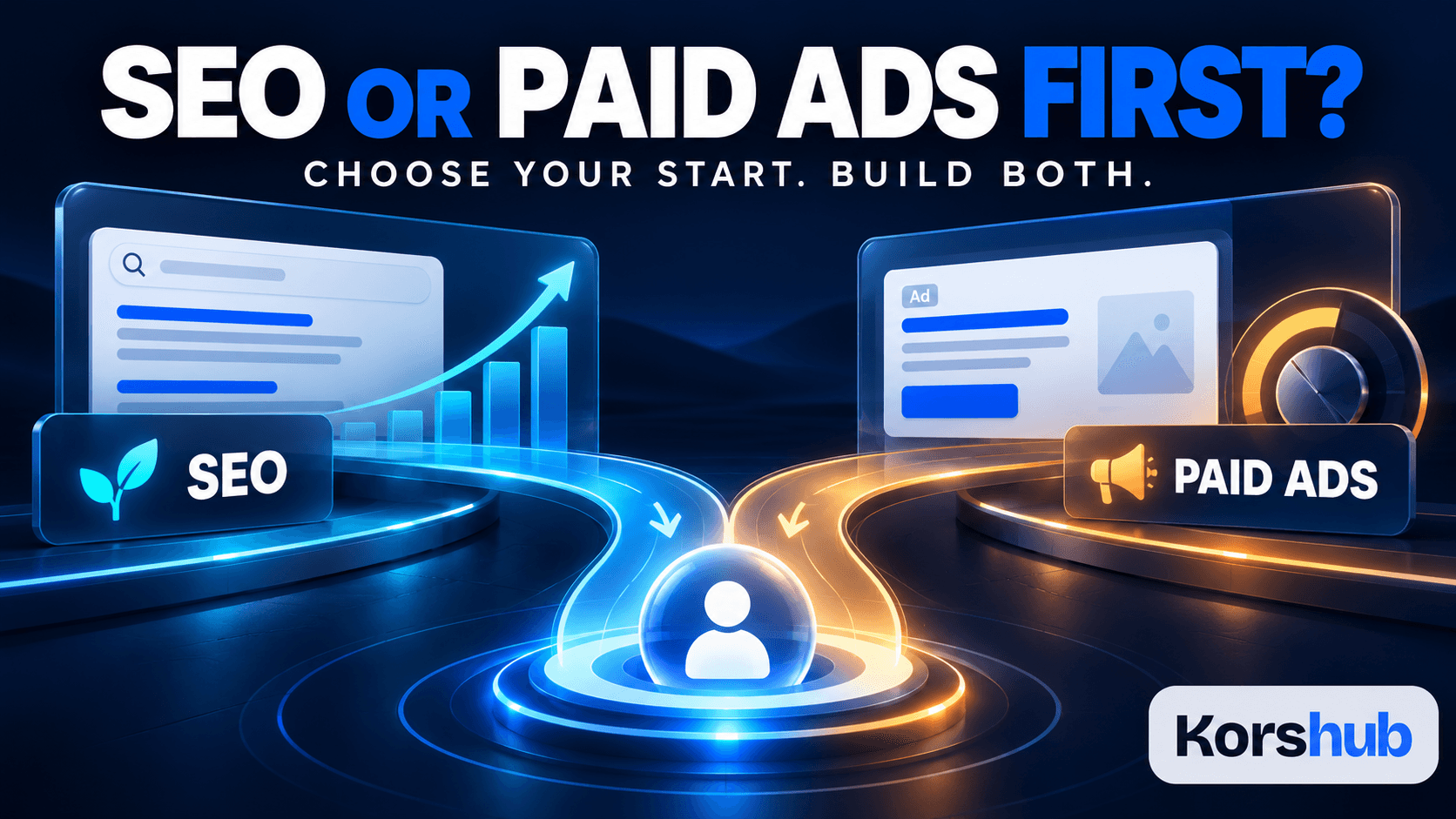
You have one website and limited time. Should you spend the next month learning to earn search traffic, or learn to buy visits through ad campaigns? The answer depends on what you need to prove first: that people can find your solution, or that your offer converts when you put it in front of them.
This SEO vs paid ads in 2026 comparison looks at two learning paths: Korshub’s beginner-to-advanced SEO course with AI and its 11-platform paid advertising course. You can choose one to start and use both skills on the same customer journey.
Advertisement
SEO vs paid ads in 2026: the quick decision
Start with SEO if you own a site, enjoy researching customer questions, and can build useful pages while you learn. Start with paid ads if you have a defined offer, a working landing page, conversion tracking, and money you can responsibly set aside for testing. Learn both if you manage marketing end to end: the same audience research, offer, and measurement plan can inform each channel.
Decision | SEO | Paid advertising |
|---|---|---|
How people reach you | Your pages appear in relevant organic search results | You pay to distribute ads through chosen platforms |
What you control directly | Site, content, technical setup, internal links | Budget, offer, creative, targeting, campaign settings |
First useful feedback | Indexing, impressions, relevant queries, then qualified visits | Ad delivery, clicks, leads or sales, if tracking is ready |
Ongoing investment | Time, content, site work, and possibly tools | Ad spend plus creative, tracking, and management |
Main beginner mistake | Publishing pages without a clear audience or useful answer | Buying clicks before proving the landing page and conversion event |
Paid ads do not buy better organic rankings. Equally, an organic visit is not free to create: useful content and a functional site take work. Compare the cost of getting a qualified customer, not just the price of a click.
When the SEO course is the better first step
The SEO course is presented as starting from the basics. Its current provider outline covers keyword research, on-page content, internal links, technical checks, Search Console, GA4, local SEO, audits, and AI-assisted content work. A website is recommended for practice, but the course description says a demo site can be used.
Choose this route if your business has repeatable questions that deserve lasting answers. A home renovation company, for instance, might explain permit requirements, compare materials, and build service pages for specific areas. The first task is not “write 100 blogs”; it is to find the questions your real buyers ask and create a page that resolves each one better than a generic summary.
Treat the AI lessons as drafting and research assistance, then check facts and add your own evidence. The course description includes ambitious ranking language and older link-building topics. Neither a course nor an AI prompt can guarantee a number-one position; verify tactics against current search guidance before using them on a client site.
When the paid advertising course makes more sense
The paid course is labeled advanced on Korshub. It spans Google, Microsoft, Meta, LinkedIn, TikTok, X, Pinterest, Snapchat, Quora, Reddit, and ShareChat Ads. Its listed lessons include account setup, keyword and audience work, bidding, conversion tracking, retargeting, campaign creation, and reports; the creator also describes assignments and practice tests.
That breadth suits a marketer who must compare channels or manage client accounts. It may be too wide as a first practical project. Pick one channel where your buyers already show intent or attention, build one offer and landing page, and test a meaningful conversion before studying the remaining ten. Ad-platform access and features can vary by region and change over time.
The course price is only part of the decision. To practice a live campaign, you need an ad budget you can afford to learn with, plus a way to distinguish a qualified lead from a cheap form fill. Watching campaign walkthroughs alone won’t establish that an offer works.
How to use SEO and paid ads together without doubling the work
Imagine you sell a meal-planning subscription. First, interview customers and identify two kinds of intent: “weekly meal plan for a family” signals a problem to research, while “buy a meal planner subscription” is closer to purchase. Create a helpful organic guide for the first and a focused subscription page for the second.
Then run a small, tracked paid test against the subscription page. Record which message attracts qualified trials and which objections appear in comments or enquiries. Use that learning to improve the page and guide, while Search Console shows which organic queries actually find them. Do not copy an ad headline into an article and assume it will rank.
Keep a shared scorecard: qualified trials or sales, acquisition cost, conversion rate, and the questions customers still ask. Report organic and paid results separately, then look at the combined business outcome. The useful mix is a feedback loop: organic pages answer customer questions; ads test distribution and offers; customer behavior improves both.
Which course should you choose?
For a newcomer building a site or content career, the SEO course is the more approachable starting point. For someone who already understands funnels and wants to run campaigns across networks, the paid advertising course offers broader platform practice. If you run a business, choose the skill that addresses your current bottleneck, then add the other once you have a measurable offer and a repeatable process.
Before enrolling, preview the lessons and check the current course pages for pricing, coupon availability, and syllabus updates. Both fields change quickly; the strongest outcome is a real page or campaign you can explain and improve, not simply completing a large lesson count.
Frequently asked questions
Should a beginner learn SEO or paid ads first?
If you have no site, offer, or tracking experience, SEO fundamentals and a practice website can build a useful base. If you already have a clear offer and a test budget, a single paid campaign can teach you about customer response while you develop organic pages.
Does paying for ads improve SEO rankings?
No. Paid Google ads do not directly raise your organic ranking. Ads can still help you learn which offers and messages resonate, and you can use that insight when improving your site.
Can SEO replace paid advertising?
Sometimes organic search can meet much of a business’s demand, but it cannot guarantee immediate visibility for a new offer or every audience. Paid distribution can test or promote a specific offer; the right mix depends on your goals and economics.
Is the 11-platform ads course suitable for a complete beginner?
Korshub labels it advanced. A beginner can preview it, but should focus on one platform, one conversion goal, and the measurement basics before attempting all eleven networks.
Does the SEO course teach AI search optimization?
Its outline includes using ChatGPT for keyword ideas, content, headlines, and SEO research. That is not a promise of visibility in AI answers; helpful, verifiable pages and a crawlable site remain essential.
Do I need to buy both courses?
No. Select the one that solves your immediate skill gap and practice it on a real or demo project. Add the second when you can explain what the first channel taught you and where a complementary channel would help.