YouTube
Free
Price
No active coupon right now
View Course →No coupon right now. We'll tell you when there is one.
Mark your own learning status. Opening a course link does not establish enrollment.
Loading saved status…
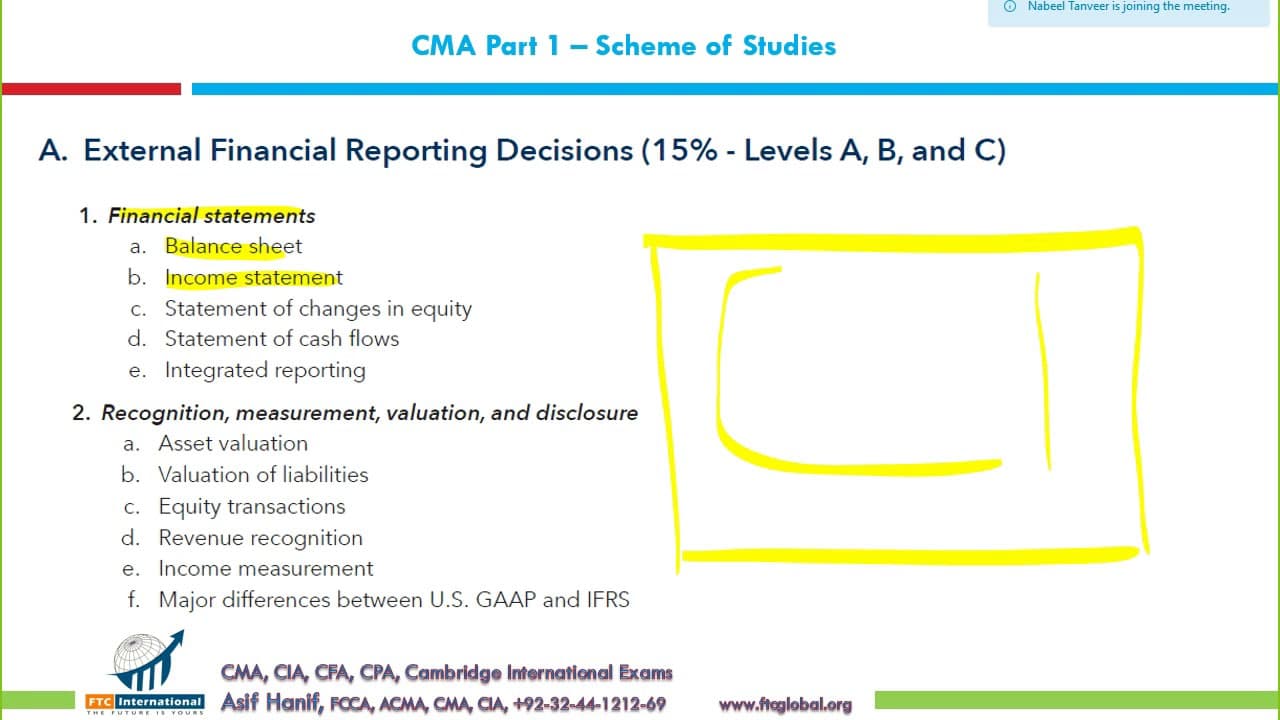
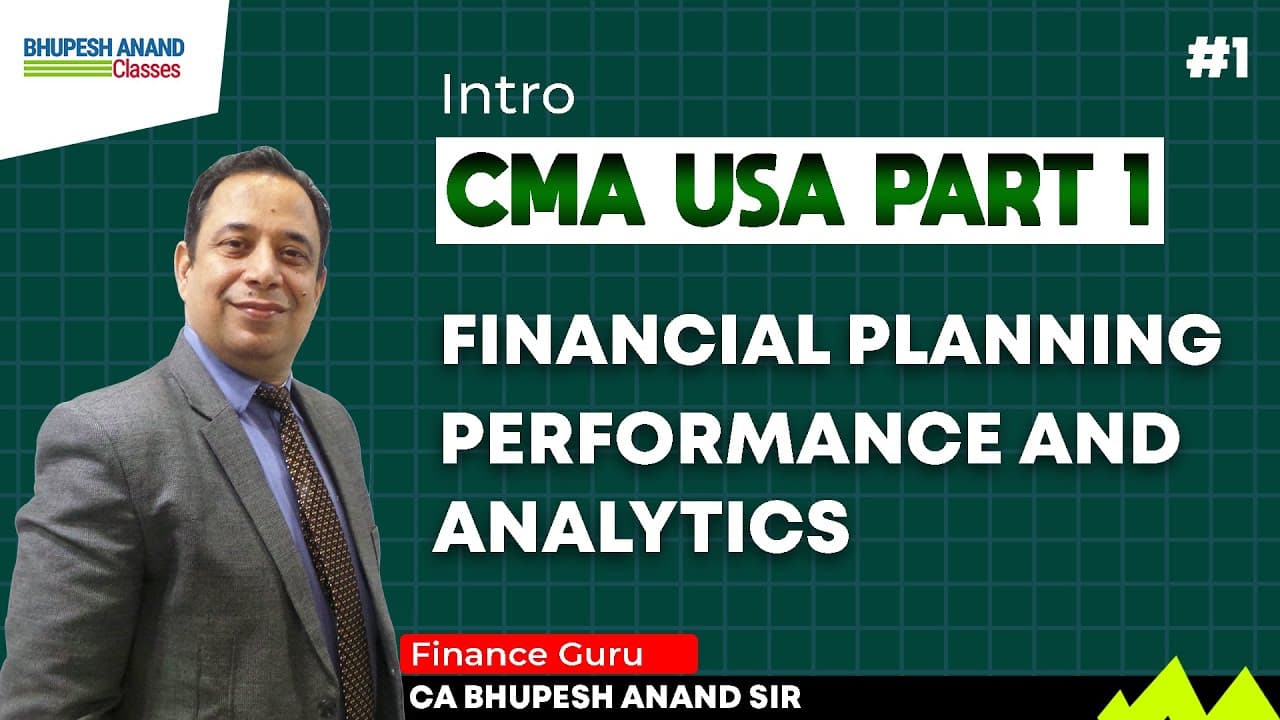
This intermediate package supports candidates preparing for CMA Part 1, which focuses on financial planning, performance and analytics. The description sets out six sections, from external financial reporting decisions through planning and budgeting, performance management and cost management.
The title dates the package to 2020 to 2024, and the description reads as a syllabus overview rather than a list of lessons. Compare it with the current CMA Part 1 content outline before relying on it.
The Certified Management Accountant (CMA) certification is a globally recognized credential that signifies expertise in financial management and strategic management. The CMA program is divided into two parts, and Part 1 focuses on Financial Planning, Performance, and Analytics. Here's a brief description of CMA Part 1:
1. External Financial Reporting Decisions
This section covers the basics of financial reporting, including the preparation of financial statements, recognition, measurement, valuation, and disclosure of specific items. The goal is to ensure candidates understand how financial reports are prepared and can interpret these reports accurately.
2. Planning, Budgeting, and Forecasting
This area emphasizes the importance of strategic planning, budgeting processes, forecasting techniques, and budget methodologies. It teaches candidates how to prepare budgets, perform cost-volume-profit analysis, and apply various forecasting methods to aid in decision-making.
3. Performance Management
Candidates learn about different tools and techniques for managing and measuring performance. This includes understanding cost and variance measures, responsibility centers, reporting segments, and performance measures that align with organizational strategies.
4. Cost Management
This section delves into cost concepts, behaviors, and allocation. It covers topics such as overhead costs, job costing, process costing, activity-based costing, and operational efficiency strategies. The objective is to equip candidates with the knowledge to manage and control costs effectively.
5. Internal Controls
Understanding internal controls is crucial for managing risks and ensuring the integrity of financial information. This segment covers the types, components, and limitations of internal control systems. It also addresses corporate governance, internal audit, and system controls and security measures.
6. Technology and Analytics
This newly emphasized area reflects the growing importance of technology and data analytics in the accounting profession. It covers information systems, data governance, technology-enabled finance transformation, data analytics, and decision analysis tools. The focus is on equipping candidates with the skills to leverage technology and analytics in financial planning and decision-making.
CMA Part 1 is rigorous and requires a deep understanding of financial principles, strategic planning, and analytical skills. It's designed to prepare candidates for roles that require expertise in financial management and strategic decision-making within organizations. Achieving a CMA certification, starting with Part 1, can significantly enhance one's career prospects in the field of management accounting and finance.
Advertisement
CMA Part 1 Review: Budgeting, Forecasting, Cost Allocation & Integrated Reporting



Canadian Securities Course (CSC) Level 1 Prep Free Preview
Tracking since 15 Nov — not enough history yet to tell you whether today's price is any good. Watch the course and we'll tell you when it drops.
This is what we recorded in US pricing — not every price this course has ever had, and prices differ by country.
No Korshub reviews yet.