
Udemy
 Udemy
UdemyPrice
No active coupon right now
View Course →No coupon right now. We'll tell you when there is one.
Mark your own learning status. Opening a course link does not establish enrollment.
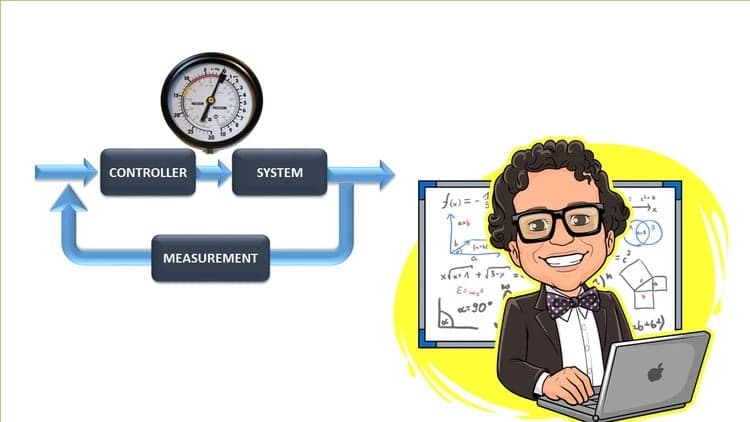
Control systems sit at the heart of mechanical and electrical engineering, yet many courses hide the intuition beneath heavy math. This one reveals the reasoning step by step. You'll start by deriving mathematical models from scratch—drawing free body diagrams and applying Newton's laws—then move to electrical systems with capacitors, resistors, inductors, and DC motors. Throughout, you'll use MATLAB/Simulink to run actual simulations and watch theory turn into behavior.
The final section tackles control system design, including the famous PID controller and techniques for tuning it to achieve the performance you want. By the end, you'll understand not just what a transfer function is, but why it matters—and how to use it to predict how your system will respond.
This course covers the basics of modeling, simulations and control of mechanical and electrical systems. The course is divided into 3 main sections:
1. Mechanical systems modeling,
2. Electrical systems modeling
3. Control systems design
Section #1: Mechanical System Modeling
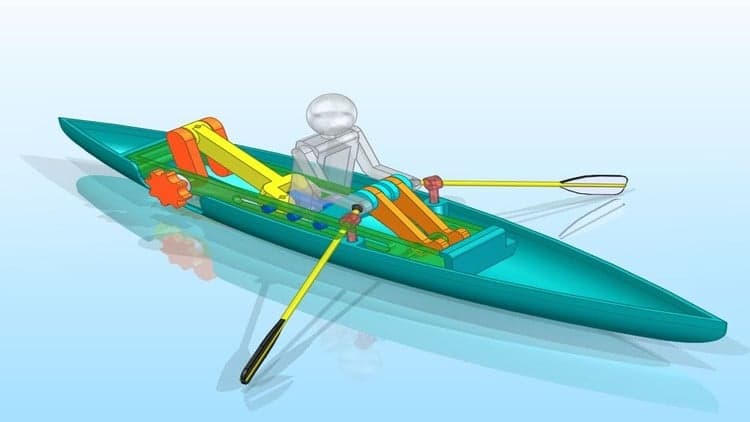
The section covers the basics of how to derive mathematical models from scratch, draw free body diagrams, apply Newton’s laws of motion and simulate mechanical systems using MATLAB/Simulink. This section also covers Laplace domains, transfer function development, and system simulations using several inputs such as impulse and step inputs.
Section #2: Electrical System Modeling
This section covers electrical system modeling fundamentals. It covers how to mathematically model basic elements such as capacitors, resistors and inductors, how to apply Kirchoff’s circuit law to solve various electrical circuit. The section also covers advanced topics such as how to model DC motors, and batteries in MATLAB/Simulink environment.
Section #3: Control systems fundamentals/Design
This section includes the basics of control system and the steps required to build any control system. This section covers one of the most famous controllers known as PID or Proportional Integral Derivative controller. The section includes basics of how to perform block diagram model reduction and how to assess dynamic system performance. Furthermore, the section covers how to perform PID tuning to achieve the best desired system performance.
Advertisement
Fundamentals, Electrical Industrial Controls &Motor Starters
Not the best price we've seen. The lowest we've recorded is $10.99 on 18 Aug.
This is what we recorded in US pricing — not every price this course has ever had, and prices differ by country.