Udemy
 Udemy
UdemyPrice
No active coupon right now
View Course →No coupon right now. We'll tell you when there is one.
Mark your own learning status. Opening a course link does not establish enrollment.
Systems thinking flips how you see problems—from isolated pieces to interconnected wholes. This course teaches you the standardized language of systems theory so you can describe and model real-world complexity without advanced mathematics.
Starting with simple system models, you'll build sophisticated frameworks covering efficiency, functionality, energy, and entropy. You'll explore system boundaries, emergent hierarchies, feedback loops, and how systems evolve over time. Designed for anyone curious about how things work together—whether managing organizations, understanding ecosystems, or solving cross-cutting problems—this course equips you with conceptual tools for a fundamentally clearer worldview.
This course is a comprehensive introduction to the area of systems thinking and theory that is designed to be accessible to a broad group of people.
The course is focused upon two primary achievements; Firstly providing students with the key concepts that will enable them to see the world in a whole new way from the systems perspective, what we call systems thinking.
Secondly the aim is to provide you with the standardized language of systems theory through which you will be able to describe and model systems of all kind in a more coherent fashion whilst also being able to effectively communicate this to others.
This course requires no prior specific knowledge of mathematical modeling or science, as we will be starting with the very basic model of a system and then building upon this to create more sophisticated representation. The course is broken down into four main areas.
Firstly we will start the course with an overview to systems thinking making a clear distinction between or traditional methods of analytical reasoning and the alternative method of synthesis that forms the foundations of system thinking.
Next we will delve into systems theory to start building our model of a system, clearly defining what exactly a system is and is not. During the rest of this section we will build upon this model by adding the concepts of efficiency, functionality and talking about energy and entropy.
In the third section to the course we will develop our model into a more powerful framework by adding the concept of the system’s environment, discussing systems boundaries, synergistic interactions between systems and the emergence of hierarchical structure out of these synergies.
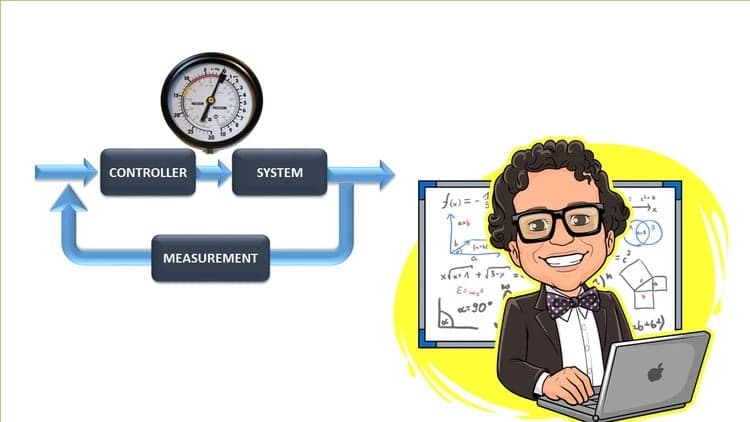
In the last section we will look at different models for capturing how systems change over time what is called system dynamics, here we will explore the ideas of feedback loops, causal loop diagrams and the phenomena of homeostasis. Finally we wrap-up the course with a discussing of systems science, looking at how and why it is of relevance to us.
Advertisement
Not the best price we've seen. The lowest we've recorded is $10.99 on 18 Aug.
This is what we recorded in US pricing — not every price this course has ever had, and prices differ by country.