Udemy
 Udemy
UdemyMark your own learning status. Opening a course link does not establish enrollment.
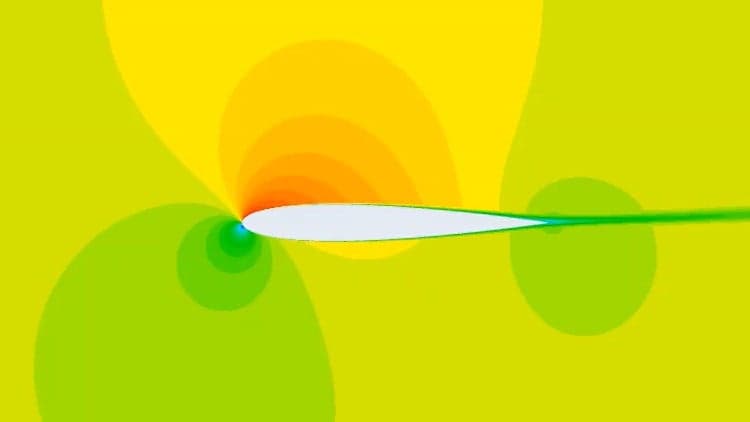
This course walks through core CFD techniques by executing a well-known validation case: the NACA 0012 airfoil simulation. Drawing on the instructor's experience at research universities and aerospace companies, it covers the fluid dynamics principles behind the workflow before moving into ANSYS tools like Design Modeler, Mesher, and Fluent.
Best suited to engineering students or professionals with an interest in aerospace or fluid dynamics who want to see a real CFD validation study performed end-to-end.
The instructor notes the resulting error margin is unusually low, and flags that experimental and numerical error are a normal part of CFD work.
In this course, I show the basic techniques and knowledge required for CFD, followed by the execution of the best online CFD case of NACA 0012 airfoil. This is a elementary simulation that has been done countless times, and it is likely the best you can do with a validation study. I draw knowledge and experiences from my years of working with a top US research universities, public aerospace companies, and public US entities. The video begins with understanding the scope and purpose of the video while touching on the basic fluid dynamic principles that are needed for this type of work. Then, we start to look to use ANSYS and its built in tools like Design Modeler, Mesher, and Fluent. The basic characteristics of the NACA 0012 airfoil found in this video is found online and it has been well documented for years. Going through a mesh technique that I personally have refined and has found to work the best, I execute the simulation and find that my results match NASA's experimental data very well. In reality, getting such as low error is basically unrealistic and there always are experimental errors and numerical errors. This is one of the few cases that CFD does very well in, but that can be discussed more in the future video.
Advertisement


6 Practice Exams | AWS Certified Cloud Practitioner CLF-C02