Coursera
Subscription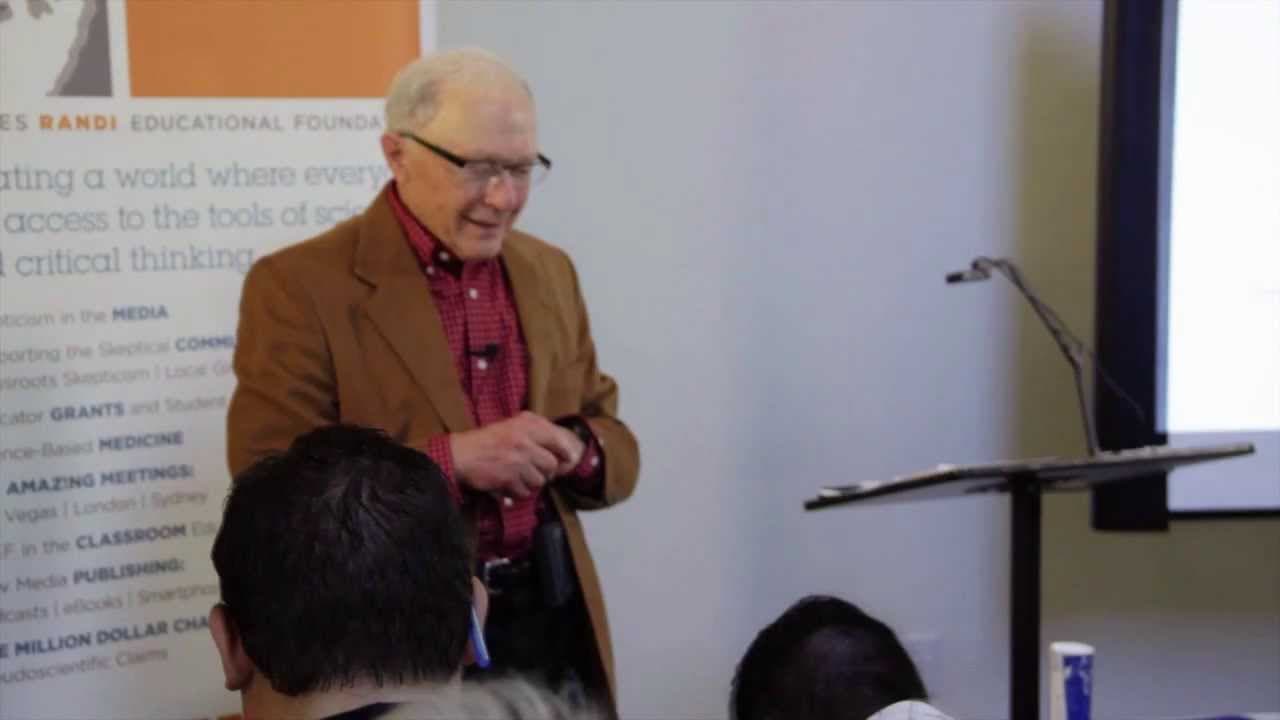 YouTube
Price
This course is free to watch on its platform.
Watch free on YouTube →Mark your own learning status. Opening a course link does not establish enrollment.
Loading saved status…
This first lecture from a course on dubious claims sets up the habit of careful observation. It uses a classroom-style episode, students trying to bend a key with their minds, to show how eyewitness accounts drift from what actually happened.
The lecture makes the point that observation must be selective, since no one can describe everything. The hard part is deciding what is relevant.
The lecture belongs to a course taught by psychologist Ray Hyman, who has studied perception and problem solving, and it is produced by a foundation that helps people assess paranormal and pseudoscientific claims.
Uri Geller. The Geller Effect. Two students attempt to bend a key with their minds. The problem of unplanned observation. Eyewitness testimony. GIGO. "As described is not the same as "as it happened."
Student descriptions of the key bending event. Impossibility of describing everything. Observation has to be selective. Problem of relevance. Informal observation is retrospective, unsystematic, and contaminated by the limitations and quirks of human memory and cognition. Scientific observation is prospective, planned, systematic, calibrated and productive of trustworthy data.
A companion course guide can be downloaded here: http://jref.swmirror.com/20730
--
More about the HOW TO THINK ABOUT DUBIOUS CLAIMS course:
Smart people can act stupidly by failing to apply their intelligence wisely. This course draws lessons from scientist smart people who went astray. This course provides a framework to help you avoid their mistakes.
Ray Hyman is a professor emeritus of psychology at the University of Oregon. Hyman's published research has been in such areas as pattern recognition, perception, problem solving, creativity, and related areas of cognition. He has written and published extensively on the psychology of deception and critiques of paranormal and other fringe claims.
The James Randi Educational Foundation was founded in 1996 to help people defend themselves from paranormal and pseudoscientific claims. Through scholarships, workshops, and innovative resources for educators, the JREF works to inspire this investigative spirit in a new generation of critical thinkers. Learn more at http://www.randi.org.
Advertisement
No Korshub reviews yet.
Speak Freely, Think Critically: The Free Speech Balance Act