Udemy
 Udemy
Price
No active coupon right now
View Course →No coupon right now. We'll tell you when there is one.
Mark your own learning status. Opening a course link does not establish enrollment.
Loading saved status…
The course argues that meshing quality drives solution accuracy, and that dirty CAD with merged faces, gaps or interference has to be repaired before a good mesh is possible. It covers the fault-tolerant and watertight geometry workflows introduced in ANSYS 2021, alongside conventional approaches.
The list is broad, so it suits readers who already know the Fluent interface and want to compare meshing routes.
In engineering analysis, the CAD model plays an important role. It may have errors like merged faces, duplicate curves, extra edges, split edges, gaps, or even interference errors. Therefore, we need to avoid dirty CAD geometry, which needs to be repaired and converted to error free geometry. To avoid modeling errors, it is important to select the correct physical models. The most important model for fluid dynamics is a set of partial differential equations called the Navier-Stokes equations.
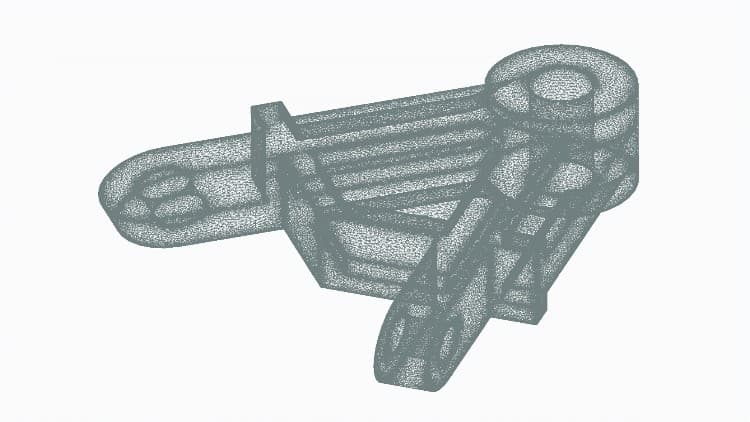
After getting error-free, correct geometry, we need to go for discretization or meshing. To have an accurate result, we need to focus on better meshing quality because the better the mesh, the better the solution. To minimize the discretization error, we need to go on meshing and remeshing again and again till we reach the minimum error. When we get the exact solution, we say that the convergence criteria have been met.
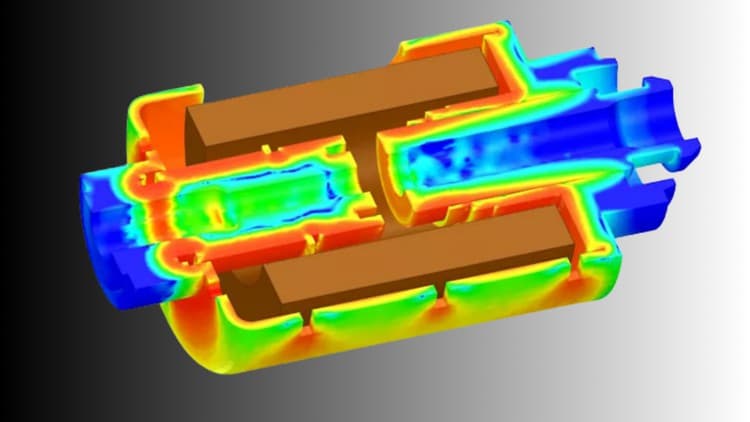
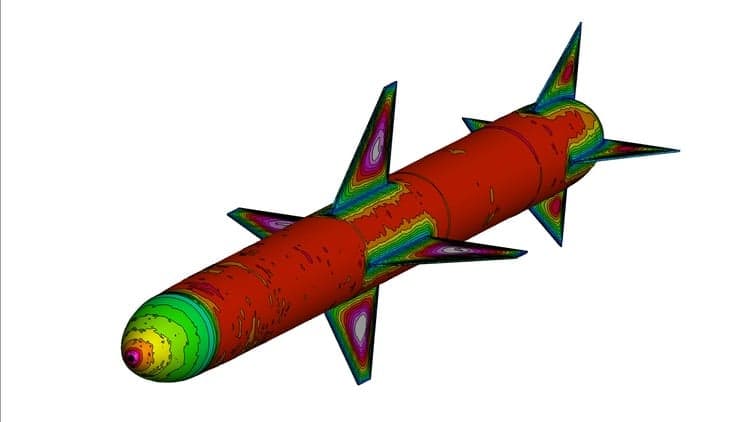
From this theoretical understanding, we can realize that in FEA, CFD, or any kind of Engineering analysis, meshing or discretization play a very important role. Sometimes the geometry or the CAD model may have some intersecting solids or surfaces. It may have errors like merged faces, duplicate curves, extra edges, split edges, gaps, or even interference errors. In these cases, we cannot go for perfect meshing. Therefore, we need to rectify those errors using the ANSYS space-claim repair tool, and even then, we can share topology. So, if we require perfect meshing, and after that, if we want to go for different types of analysis like structural or CFD analysis, we must say that ANSYS is the best software. Here, to have perfect meshing, we can adopt different meshing methods like watertight geometry and fault tolerant meshing, which are new to the ANSYS interface and have been introduced in the ANSYS 2021 version. Therefore, to be familiar with these new techniques, we have developed this course considering different types of engineering applications with advanced techniques like watertight geometry, fault-tolerant meshing as well as conventional approaches.
Accordingly, we have categorized this CFD course into three different units consisting of twenty videos relevant to industrial applications.
The first unit comprises ANSYS Fluent Fault-Tolerant Meshing, consisting of ten videos.
The second unit comprises ANSYS Fluent watertight geometry, consisting of four videos, and the third unit contains four videos with the conventional approach of CFD Fluent flow analysis.
Unit 1: CFD Flow Analysis with ANSYS Fluent Fault Tolerant Meshing:
(i) Introduction to the Course
(ii) CFD Heat Transfer Analysis through a Shell-Tube Heat Exchanger using ANSYS Fluent Fault Tolerant Meshing
(iii) CFD Heat Transfer Analysis through a Counter-Flow Heat Exchanger using ANSYS Fluent Fault Tolerant Meshing
(iv) CFD Heat Transfer Analysis through a Cross-Flow Heat Exchanger using ANSYS Fluent Fault Tolerant Meshing
(v) CFD Heat Transfer Analysis through a Condenser Heat Exchanger using ANSYS Fluent Fault Tolerant Meshing
(vi) CFD Heat Transfer Analysis through a Plate Heat Exchanger using ANSYS Fluent Fault Tolerant Meshing
(vii) CFD Heat Transfer Analysis through a Surface Condenser using ANSYS Fluent Fault Tolerant Meshing
(viii) CFD Fluid Mixing through a Special type Heat Exchanger using ANSYS Fluent Fault Tolerant Meshing
(ix) CFD Heat Transfer Analysis through an Exhaust Manifold using ANSYS Fluent Fault Tolerant Meshing
(x) CFD Heat Transfer Analysis through Catalytic Converter using ANSYS Fluent Fault Tolerant Meshing
(xi) CFD Heat Transfer Analysis through a Wind Tunnel using ANSYS Fluent Fault Tolerant Meshing
(xii) CFD Heat Transfer Analysis through a Venturi-meter using ANSYS Fluent Fault Tolerant Meshing
(xiii) CFD Heat Transfer Analysis through an Expander using ANSYS Fluent Fault Tolerant Meshing
(xiv) CFD Heat Transfer Analysis through Heat Pipe using ANSYS Fluent Fault Tolerant Meshing
(xv) CFD Conjugate Heat Transfer Analysis using ANSYS Fluent Fault Tolerant Meshing
Unit 2: CFD Flow Analysis with ANSYS Fluent Watertight Geometry:
(i) CFD Watertight Geometry Workflow through a Wind Tunnel
(ii) CFD Heterogeneous Fluid Mixing using ANSYS Fluent Watertight Geometry
Unit 3: CFD Flow Analysis with conventional ANSYS Fluent Flow
(i) CFD Flow Analysis Over a Cylinder Surface using ANSYS Fluent
(ii) CFD Intermixing of Fluids in a Bent-Pipe using ANSYS Fluent
(iii) CFD Flow through a Converging & Diverging Section (2D) using ANSY Fluent
(iv) CFD Flow through a Venturi-meter using ANSYS Fluent
Advertisement


Tracking since 15 Nov — not enough history yet to tell you whether today's price is any good. Watch the course and we'll tell you when it drops.
This is what we recorded in US pricing — not every price this course has ever had, and prices differ by country.
No Korshub reviews yet.