Udemy
Free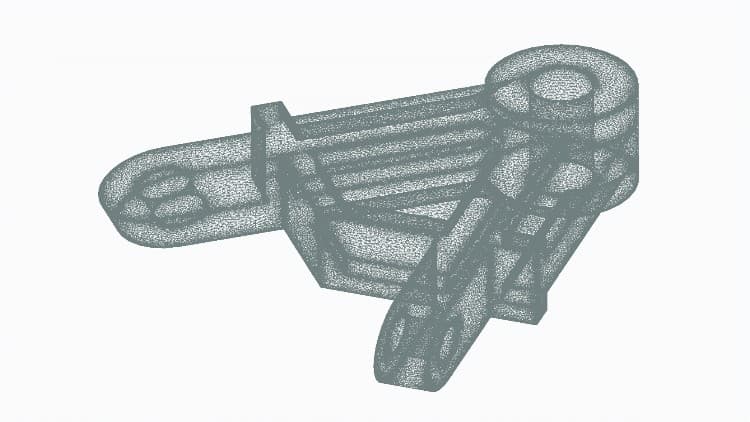 Udemy
UdemyMark your own learning status. Opening a course link does not establish enrollment.
This course covers reverse engineering workflows in Siemens Solid Edge 2021, focused on turning imported mesh data into usable native surfaces. You'll learn to clean up meshes affected by import errors, identify logical regions within a mesh, and extract or fit surfaces on top of those regions using traditional surface modeling tools.
CAD users and designers who work with imported 3D scan or mesh data and need to convert it into clean, editable surface models for downstream design or manufacturing.
Create native surfaces on top of imported data by using mesh cleanup tools to remove any errors that may have resulted from the import process, allowing designers to obtain a workable set of triangles. Once you have a sound mesh, regions can be identified and created, and those regions can be further extracted as surfaces and edited using traditional surface modeling tools. All parts designed with Siemens Solid Edge 2021 Academic Software.
Expand your 3D design capabilities beyond the norm. Solid Edge provides intuitive mesh cleanup tools to remove any errors that may have resulted from the import process, allowing designers to obtain a workable set of triangles. Once you have a sound mesh, regions can be identified and created, and those regions can be further extracted as surfaces and edited using traditional surface modeling tools.
Create workable meshes: Imported mesh bodies don’t always meet your needs, so Solid Edge delivers tools to remove specific facets or mesh regions, fill holes and smooth the mesh. These mesh cleanup operations help designers to prepare faceted bodies for downstream modeling and/or manufacturing.
Model preparation made easy: Finding logical facet shapes is paramount to preparing the geometry for analytical surface operations, and the Identify Regions tools permit logical grouping of triangles that can be used in the creation of faces.
Intuitive surface creation: The true power of reverse engineering is realized when you can create native surfaces on top of imported data. Solid Edge delivers commands to not only extract faces from identified regions of the mesh, but also to fit analytical faces on top of a region.
Advertisement

Siemens NX Mastery : 500 Examples|20 Project|300 Q&A|10 Test