
Khan Academy
Free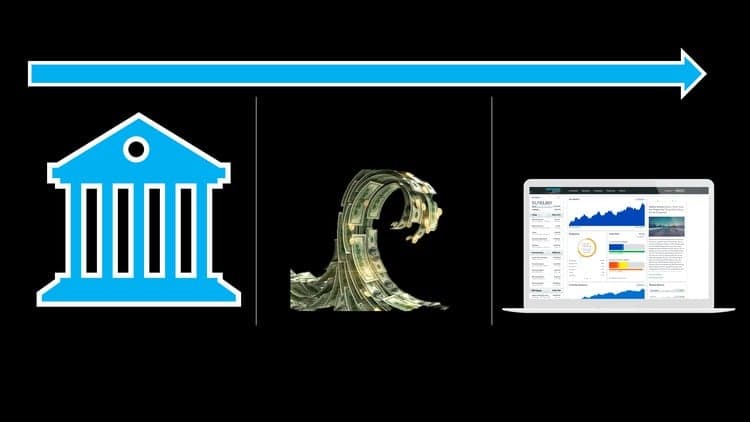
Price
No active coupon right now
View Course →No coupon right now. We'll tell you when there is one.
Mark your own learning status. Opening a course link does not establish enrollment.
Loading saved status…
This Udemy course walks through setting up Personal Capital and linking financial accounts so that balances and transactions appear in one place. It focuses on the net worth view, the investment overview and the planning tools, and it explains how the software sits between accounting packages and general budgeting apps.
It suits people who want a single view of their assets and liabilities and are weighing up a tool for tracking money. Readers who already use accounting software will find the comparison with it helpful when deciding what fits their needs.
Check how the software handles your data before connecting accounts, since the course itself gives time to security.
Personal Capital is currently a free software that can connect to financial institutions, pulling in financial asset and liability balances, as well as transaction detail, into one location.
The strong areas of benefit of using Personal Capital software are its ability to provide net worth or balance sheet information, investment management information, and planning tools such as retirement planning and other large planning goals.
The Personal Capital software also downloads transaction detail and allows for the categorization or assigning of accounts and tags that can then be used to generate an income statement. It also has budgeting tools to help with shorter-term cash flow management.
This course will discuss how to set up the Personal Capital software and link to accounts. We will also discuss some reasons why the software may be offered for free and look over Personal Capital data security.
We will compare the Personal Capital software to other types of software that can connect directly to financial institutions and pull financial information, such software generally falling into the category of accounting software that uses the double-entry accounting system or financial management software.
Accounting software using the double-entry accounting system includes packages such as QuickBooks, Xero, & Wave accounting. Although accounting software utilizes financial institution connectivity it generally does so differently than Personal Capital software, which falls into the financial management category. We will discuss the differences in software.
Other financial management and budgeting software include Quicken, Mint, and Microsoft Excel, Excel actually having a template called Money in Excel that has financial institution connectivity.
Learners will practice converting financial data into an income statement by downloading transactions from financial institutions, categorizing them, and then exporting them into Excel for sorting. We will compare the process with what would be done using accounting software like QuickBooks.
The course will discuss the benefits of the personal net worth or balance sheet functionality of Personal Capital software, the software pulling in assets and liability balances automatically for items such as bank accounts, investment accounts like 401(K), savings accounts, CD accounts, credit card balances, mortgage balances, and loan balances.
We will also discuss the benefit of the software providing more detail on our investment holdings and providing insights and suggestions to improve returns and reduce risk. The ability to pull investments into one place allows a more rounded analysis of the data than you may get from one brokerage account analyzed in isolation.
Learners will be able to use the projection planner to help plan for retirement and other large investment items. The Personal Capital software utilizes sophisticated analytical tools including a Monte Carlo Simulation tool.
We will also explore the home appraisal tool offered by the software and we will practice adding non-financial institution assets and liabilities, making our net worth or balance sheet completer and more accurate.
Advertisement
Tracking since 15 Nov — not enough history yet to tell you whether today's price is any good. Watch the course and we'll tell you when it drops.
This is what we recorded in US pricing — not every price this course has ever had, and prices differ by country.
No Korshub reviews yet.