Udemy
Free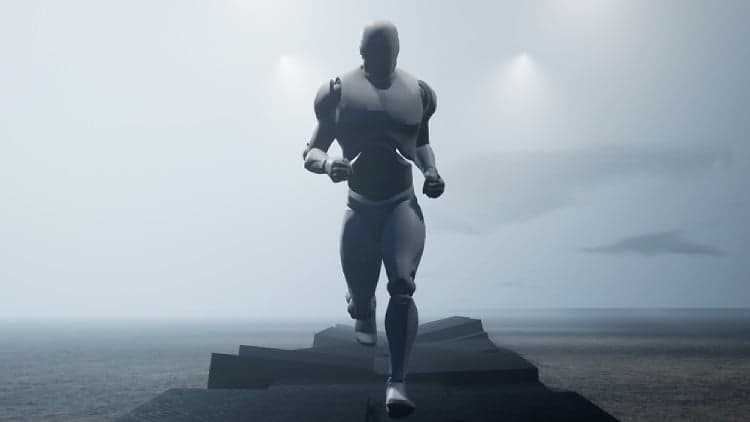 Udemy
UdemyPrice
No active coupon right now
View Course →No coupon right now. We'll tell you when there is one.
Mark your own learning status. Opening a course link does not establish enrollment.
Procedural animation replaces the static walk-cycle library with a responsive system that adapts to your character and environment in real time. Instead of building hundreds of animation variations, you'll learn how to create intelligent logic that determines where a character places their feet, adjusts stride based on speed, and manages hip and spine motion. This system works within Unreal's Control Rig, running as a single efficient node in your animation blueprint so it blends seamlessly with other animations.
The approach goes beyond specific techniques. You'll understand the underlying principles of human locomotion so you can apply them to any character type—a heavyweight warrior, a nimble archer, a robot with mechanical strides, or even a swimming shark. This flexibility pays dividends: tweak a few variables instead of resculpting dozens of animations when you want to change how someone moves.
In this course you will learn how to create a fully procedural walk/run animation system for characters, entirely within Unreal Engine 5.1+
This system will allow you to control every aspect of the characters walk and run style, with manual control over every bone, using custom logic and variables inside Control Rig (which allows for very good performance, allowing it to be used on many characters at once).
With a fully procedural animation system, your characters will fit within their environment and adapt their movement based on the surroundings. Whether the character is walking, running or anywhere in between, standing with one foot on a ledge, walking across stepping stones, running up a ramp backwards whilst spinning in circles, or any other situation your character may find themselves in.
To create this level of interaction with traditional static animations, you would need to create hundreds if not thousands of walk cycle variations and a complex system to blend between different animations at the appropriate times. Then if you'd like to make a tweak, such as to change the character's walk style or speed, you would have to start all over again.
Instead, with a procedural system, we figure out the logic that dictates how a human actually walks: where they place their feet, how their speed influences their stride time, how they swing their hips and spine to accommodate for their leg movements; to create an intelligent system that mimics how a human (or any character) would walk.
After you've created the system (which is included as a download for use or reference), you can adapt it to any character you may want in the future. For example, you may create a heavier & stronger character for your game, perhaps a robot / mech / monster, and instead of spending hours creating walk cycles to figure out how he should move, you simply tweak a few numbers in the procedural system to see how the character looks when he stamps his feet whilst walking, or takes longer strides, or swings his arms like a madman.
We don't rely on any major inbuilt functions within the engine, and so the same concepts and techniques can apply to any form of procedural animation. For example, after completing the course, you may want to take what you've learnt about creating procedural human animations and use the same concepts to make a procedural swimming animation for a shark. Or procedural weapon recoil controlled by the strength of the gun. Or a parkour climbing system. In theory, anything that can be animated can be animated procedurally. Is it always beneficial? No. But procedural animation is the best solution for any animations which need to be adaptive and change based on the environment, user input, or gameplay events. The best part is, everything we create in this course runs as a single node in the animation blueprint, allowing you to blend it with regular animations, or any input pose for the character.
This is not a course where I simply tell you what buttons to press. Every single step is explained, and the thought process behind decisions about what to do next is discussed, so you will always have an idea of why we're doing each step. We routinely take a look at what we have created so far to analyse it for further improvements.
The information and ideas in this course are not available anywhere else, trust me; I have looked, as all of the solutions are a result of 7 years of experimentation with procedural animation. This method of animation isn't being done to this degree by any game developers yet, only basic hybrid IK systems, and I strongly believe it will be the primary form of character animation in the next few years.
I have set up a Discord server where you can directly ask me any questions, or see the results of other students of the course. If there are any areas that you don't understand or need further explanations, I'll be happy to help, and look forward to seeing your results!
Advertisement


Not the best price we've seen. The lowest we've recorded is $12.99 on 17 Aug.
This is what we recorded in US pricing — not every price this course has ever had, and prices differ by country.