edX
 edX
edXPrice
No active coupon right now
View Course →No coupon right now. We'll tell you when there is one.
Mark your own learning status. Opening a course link does not establish enrollment.
Civilian protection has become a cornerstone of international law, yet execution remains fraught with dilemmas: Do peacekeepers armed with mandates actually shield non-combatants better than unarmed approaches? Why do norms that should guarantee safety still fail?
Led by a researcher embedded in peace work, this course examines the evolution of civilian protection norms, the competing roles of the UN, NATO, NGOs, and local movements, and dissects real protection crises in Sudan, Ukraine, and the DRC. You'll develop analytical tools to evaluate what works and what doesn't, confronting both structural constraints and political realities that outsiders rarely grasp.
How can civilians be protected in today’s wars—and what makes protection succeed or fail? As conflicts grow more complex, the risks faced by non-combatants have intensified. Understanding how international norms, peacekeeping practices, and local agency interact to shape civilian safety has never been more urgent.
This course examines the major debates driving civilian protection in contemporary conflict. You will explore fundamental questions such as: What is the civilian protection norm? Who is responsible for safeguarding civilians? How do armed and unarmed strategies compare in practice? Why do peacekeepers face persistent dilemmas? And what can we learn from current conflicts such as Sudan, Ukraine, and the Democratic Republic of the Congo?
You’ll examine:
The evolution, principles and politics of the civilian protection norm.
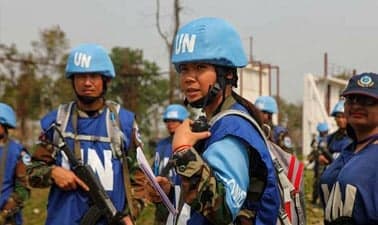
The roles, mandates and constraints of actors such as the UN, NATO, NGOs and civilian peacekeepers.
Comparative effectiveness of armed and unarmed protection strategies.
Operational, ethical and strategic dilemmas in UN peacekeeping missions.
Real-world protection challenges in Sudan, Ukraine and the DRC.
Led by Dr Sukanya Podder, Reader in Post-War Reconstruction and Peacebuilding, the course blends conceptual foundations with insights from extensive field research and policy engagement. Drawing on global case studies and contemporary scholarship, you will develop practical analytical tools for assessing protection strategies in volatile environments.
By the end, you will be able to evaluate competing approaches, identify structural and political constraints, and propose context-sensitive strategies to improve civilian protection in the world’s most challenging conflict settings.
Advertisement
This is what we recorded in US pricing — not every price this course has ever had, and prices differ by country.